Pakistan Army Says 71% of Terror Attacks Hit KP, Warns of Political-Criminal Nexus
NAEEM MEHBOOB:
Tuesday that Khyber Pakhtunkhwa (KP) remained the country’s worst-affected province by terrorism in 2025, blaming a “political-criminal-terror nexus” for the surge in violence.
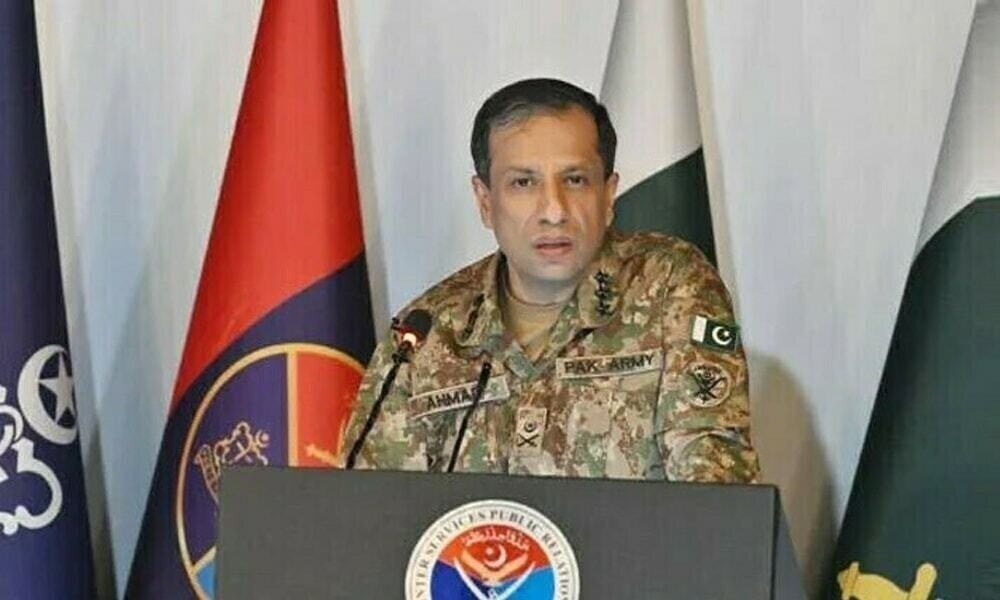
Addressing a press conference, Inter-Services Public Relations (ISPR) Director-General Lt Gen Ahmed Sharif Chaudhry said nearly 71 percent of all terrorist incidents reported nationwide last year occurred in KP, creating what he described as a politically conducive environment for militancy.
“The primary reason for this is a politically conducive environment and the flourishing political-criminal-terror nexus,” he said, adding that the media briefing aimed to provide a comprehensive overview of counterterrorism efforts over the past year.
According to the ISPR chief, law enforcement agencies carried out 75,175 intelligence-based operations (IBOs) across the country in 2025. Of these, 14,658 were conducted in KP, 58,778 in Balochistan, and 1,739 in other parts of Pakistan.
He said a total of 5,397 terrorism incidents were recorded nationwide during the year. KP accounted for 3,811 incidents, followed by 1,557 in Balochistan, while only 29 incidents were reported elsewhere. During counterterrorism operations, 2,597 militants were killed, he added.
Lt Gen Chaudhry said civilians and other “soft targets” were deliberately targeted in 10 major attacks reviewed during the briefing, with Afghan militants involved in all of them. Video confessions of arrested militants were also shown to journalists.
He highlighted several high-profile attacks, including the Jaffar Express incident in which 21 civilians were killed, calling it a tragedy that would never fade from public memory. He said a civilian bus attack in Noshki and an assault on the Frontier Corps headquarters in Quetta, which left eight civilians dead, were also carried out by Afghan nationals. A similar attack on the FC headquarters in Peshawar occurred in November, he added.
Referring to an attempted attack on Cadet College Wana, the ISPR chief said militants had tried to replicate the 2014 Army Public School attack in Peshawar. “This is a war of the nation, a war of every single child,” he said, rejecting claims that the fight against terrorism was solely the military’s responsibility.
Turning to regional dynamics, Lt Gen Chaudhry said Afghanistan had become a hub for terrorist operations, accusing the Afghan Taliban regime of allowing militant groups to operate from its soil. He also alleged a growing nexus between India and militant outfits, saying it posed a serious threat to regional peace and security.
“If Afghanistan and India wish to confront Pakistan, they are welcome to do so,” he said, adding that Pakistan would respond with strength.
He said Pakistan had taken firm action along the Afghan border in recent months, including targeting militant positions in October 2025, and stressed that operations were directed against the Tehreek-e-Taliban Pakistan (TTP), not the Afghan Taliban.
The ISPR chief rejected allegations that the Pakistan Army uses armed drones in counterterrorism operations, saying drones are primarily used for surveillance. He accused militant groups of using armed quadcopters, with external support, and of carrying out attacks from mosques, public places, and residential areas while using women and children as human shields.
“We have to win the war against terrorism at all costs,” Lt Gen Chaudhry said. “And we will win it with strength.”