Circular Debt Falling, Tariffs Down: Energy Minister Rebuts NEPRA Report
Islamabad: Federal Minister for Energy Sardar Awais Ahmed Khan Leghari on Sunday strongly rejected several observations made in the National Electric Power Regulatory Authority’s (NEPRA) State of Industry Report 2025, calling its conclusions “factually incorrect” and based on outdated and incomplete data.
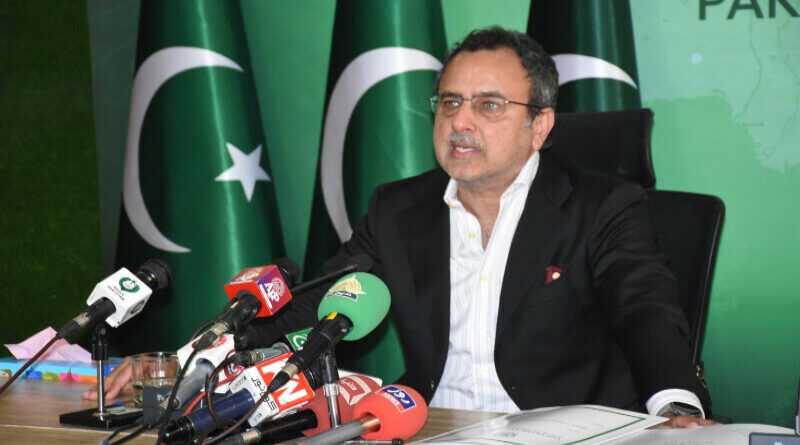
Addressing a press conference, the minister said the report had created confusion and misperceptions about the power sector. He noted that the document should have been published in August 2025, and its delayed release failed to reflect the government’s achievements or the true state of the energy sector.
Leghari said deep-rooted reforms have already begun delivering tangible relief to consumers while placing the power sector on a sustainable footing. He added that the government has ensured full servicing of existing debt through the debt service surcharge and is firmly on track to eliminate circular debt entirely within the next five to six years under a six-year settlement plan.
Responding to NEPRA’s claim of around 8,700 megawatts of surplus electricity capacity, the minister acknowledged the existence of surplus power but rejected the suggestion that the government failed to review “take-or-pay” and “must-run” contracts. He said extensive negotiations with Independent Power Producers (IPPs) led to the termination or revision of multiple contracts and the closure of inefficient plants, saving consumers billions of rupees.
He said the government made merit-based decisions to cancel nearly 8,000 megawatts of expensive future power projects, including 7,967 megawatts identified purely on merit. These steps, he said, eliminated unnecessary surplus capacity and saved consumers an estimated $17 billion in future costs.
Highlighting issues related to K-Electric, Leghari said non-payments by the utility up to June 2023 caused circular debt to rise by Rs640 billion, while over Rs300 billion remains outstanding as of November 30, 2025. He added that K-Electric has received more than Rs600 billion in subsidies over the past five years and was given comparatively relaxed regulatory targets, placing an additional burden on the national exchequer.
The minister dismissed NEPRA’s claim of a Rs780 billion reduction in circular debt as misleading. He clarified that the reduction includes Rs193 billion from lower DISCO losses, Rs260 billion through successful IPP negotiations, and nearly Rs300 billion due to improved macroeconomic indicators—figures that were formally shared with NEPRA.
He said circular debt has fallen from Rs2.4 trillion to Rs1.6 trillion within a year, marking the first significant decline in many years. “Circular debt has not increased; it has reduced by Rs780 billion, and further reductions are underway,” he said.
Leghari also pointed to major improvements in recovery performance. DISCO recoveries rose from 92.4 percent to 96.6 percent during FY2025, while the recovery gap narrowed from Rs315 billion to Rs132 billion. During the first half of FY2026, recoveries improved further by Rs43 billion compared to the same period last year.
He said a new mechanism has been introduced to ensure recoveries from government departments, with 25 percent of collections now secured through federal adjustments against verified bills. The government, he added, remains committed to gradually reducing inefficiencies within DISCOs.
The minister stressed that losses arising from subsidies are being borne by the government and not passed on to consumers. He said Rs40 billion worth of overbilling was not transferred to electricity users and that DISCO inefficiencies are no longer shifted onto consumers. Load management based on commercial losses, he added, is approved under the national power plan.
Leghari said the government has accelerated digitalisation in the power sector, enabling transformer-level load management. So far, 1.6 million smart meters have been installed nationwide with 90 percent communication availability. Consumers, he added, have been empowered through the “Apna Meter, Apni Reading” mobile application.
Rejecting NEPRA’s observations on smart metering and billing, the minister said consumers now have the right to submit their own meter readings, a reform aimed at transparency and accountability.
He said the national average electricity tariff declined from Rs53.04 per unit in March 2024 to Rs42.27 per unit in December 2025, reflecting the impact of sustained reforms. While acknowledging reduced electricity demand, he attributed it to broader economic conditions and a growing shift toward alternative energy sources.
The minister also criticised NEPRA’s decision to exclude commercial load shedding from the regulatory framework and said flawed generation planning in the past contributed to costly outcomes.
Looking ahead, Leghari said the government is pursuing further tariff reduction measures, including three-year incentive packages, tariff renegotiations, and debt refinancing, which could reduce the future burden on consumers by up to Rs400 billion.
He also rejected claims related to the Integrated Generation Capacity Expansion Plan (IGCEP), stating that generation and transmission planning are now fully aligned for the first time in Pakistan’s history, ensuring least-cost outcomes and preventing inefficiencies caused by flawed demand projections.
He added that overbilling losses have been reduced by 17 percent, with more than Rs40 billion returned to consumers, while Rs183 billion was recovered through improved governance and efficiency.