EU Welcomes Trump’s Greenland U-Turn but Rejects ‘Board of Peace’ Role
BRUSSELS: European Union leaders on Thursday welcomed U.S. President Donald Trump’s decision to retreat from his tariff threats linked to Greenland but voiced clear reservations about participating in his proposed “Board of Peace” initiative, underscoring persistent unease in transatlantic relations.
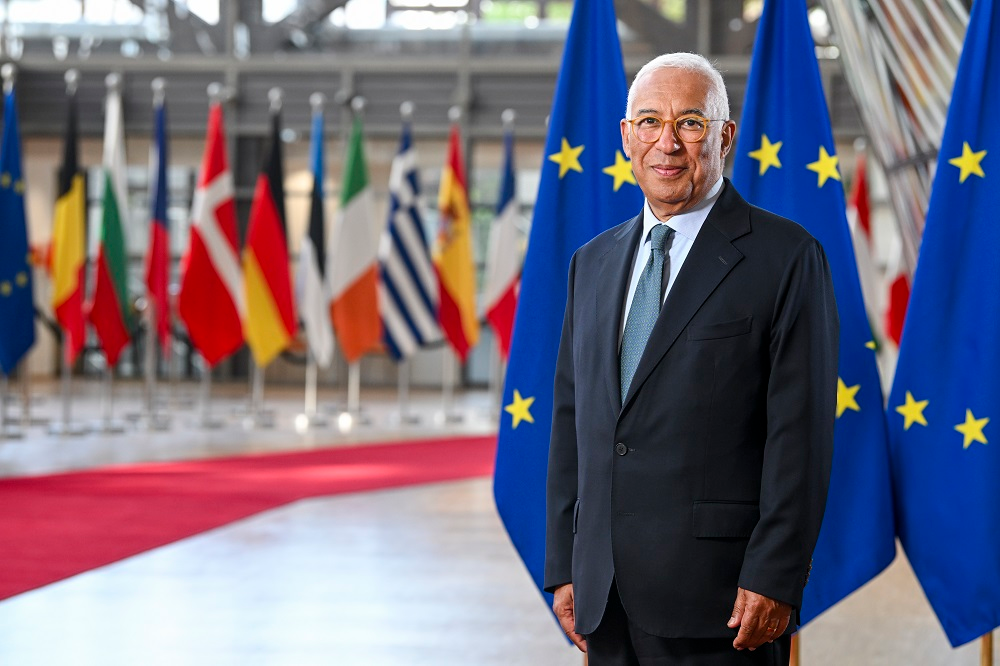
Following an emergency summit convened to reassess strained ties with Washington, EU Council President António Costa stressed that European leaders remain committed to preserving the transatlantic partnership. “It’s very important to preserve and cherish our transatlantic partnership,” Costa said, striking a conciliatory tone after days of sharp rhetoric over Trump’s threats to annex Greenland.
Costa said the immediate priority was implementing the EU–U.S. trade agreement reached in July, emphasizing the need for stability in economic relations. “The goal remains the effective stability of the trade relations,” he told reporters, while also making clear that the bloc would defend itself if necessary.
“The European Union will continue to stand up for its interests and will defend itself, its member states, its citizens and its companies against any form of coercion,” Costa said.
His remarks contrasted with the more confrontational language used by French President Emmanuel Macron, who argued that Europe must assert itself more forcefully. “Europe can make itself be respected, and that’s a very good thing,” Macron said on arrival in Brussels, adding that Europe’s use of its available tools had already produced results.
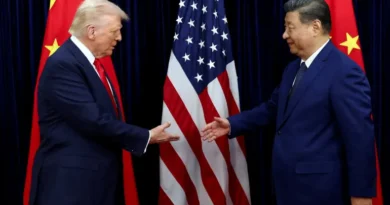
Trump had dramatically softened his stance on Greenland on the eve of the summit, abandoning his earlier demand to “acquire” the semi-autonomous Danish territory and saying for the first time that he would not use force. He also withdrew his threat to impose tariffs on European states backing Denmark.
Despite the reversal, European officials remain wary of further shifts in policy, noting the unpredictability of the U.S. president’s approach.
Before backing down, Trump had warned Denmark and NATO allies to step aside, delivering a stark message: “You can say yes, and we will be very appreciative. Or you can say no, and we will remember.”
Polish Prime Minister Donald Tusk emphasized that the United States remains Europe’s most important security partner, but cautioned against coercive diplomacy. “It’s important to understand the difference between domination and leadership. Leadership is okay,” he said.
No public details have emerged about the hastily agreed “framework” deal that preceded Trump’s reversal. Danish Prime Minister Mette Frederiksen reiterated that Denmark would not negotiate over sovereignty, while remaining open to enhanced cooperation on Arctic security. She called for a permanent NATO presence in the region, including around Greenland.
Macron confirmed that French forces would participate in NATO military exercises linked to Arctic security, though NATO’s top military officer said no formal operational planning had yet begun.
European Commission President Ursula von der Leyen also highlighted plans to strengthen EU engagement with Greenland, saying the bloc would soon present a substantial investment package, without providing specifics.
Skepticism over the ‘Board of Peace’
EU leaders were notably cautious about Trump’s proposed “Board of Peace,” initially conceived as a small body to oversee the Gaza ceasefire but later expanded into a far broader political project. Trump has suggested the body could eventually replace some functions of the United Nations.
Several European countries have declined invitations to join, including Norway, Slovenia and Sweden. Germany has issued a reserved response, while Hungary and Bulgaria have accepted participation.
Costa said most EU leaders “have serious doubts about a number of elements in the charter of the Board of Peace related to its scope, its governance and its compatibility with the UN Charter.”
Europe’s wider security pressures
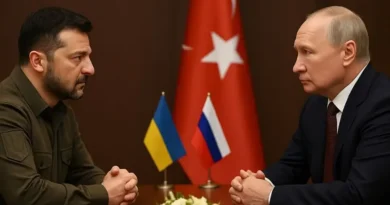
As EU leaders met in Brussels, Ukrainian President Volodymyr Zelensky sharply criticized Europe’s response to Russia’s invasion, describing it as slow and fragmented. Speaking at the World Economic Forum, Zelensky warned that Europe risked strategic irrelevance and urged the continent to act as a global power.
European Commission President von der Leyen countered that the EU has provided more than €193 billion in support to Ukraine over four years and plans a further €90 billion over the next two years.
“We know that we will never match the sacrifice of the Ukrainian people, but what we can do is stand by their side,” she said. “And I think the figures speak for themselves.”