Trump–Xi Beijing Meeting May Reshape Global Order, Raise Strategic Alarm in India
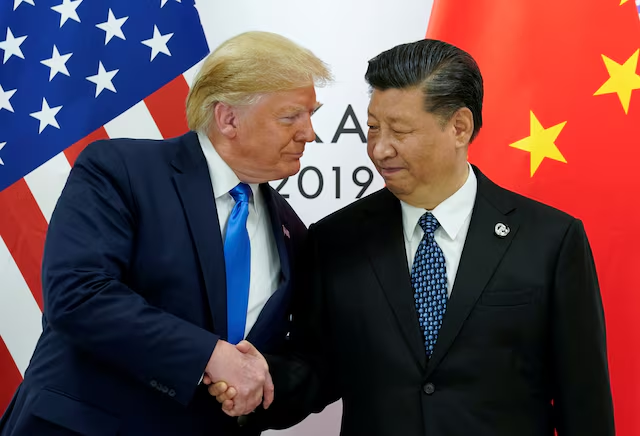
Washington :Prospects of a high-level meeting between US President Donald Trump and Chinese President Xi Jinping in Beijing in April 2026 are increasingly being viewed as a potential turning point in global diplomacy one that could ease major international tensions, while simultaneously triggering strategic anxieties in New Delhi.
According to diplomatic and media assessments, the anticipated Trump–Xi summit could contribute to stabilising US–China relations and help reduce the risks surrounding sensitive global flashpoints, including Taiwan and the Ukraine conflict. Analysts believe improved coordination between the world’s two largest powers may create space for de-escalation in multiple geopolitical theatres.
However, the same developments are being interpreted in India as a strategic warning signal. Observers argue that a deepening understanding between Washington and Beijing could weaken India’s diplomatic leverage and regional positioning.
In a detailed analysis, foreign affairs journal The Diplomat reported that President Xi had formally invited Trump to visit Beijing in 2025, while the two leaders also held talks in Busan, South Korea. Trump later described that meeting as “extremely successful,” according to the publication.
The report notes that Trump’s tariff policies and trade delays strained India–US relations, pushing New Delhi to explore ways of improving ties with Beijing. It also highlights Trump’s use of the term “G-2” in November 2025, when he described the United States and China as the world’s two dominant powers — a formulation that sparked concern in Indian strategic circles.
According to The Diplomat, relations between Washington and New Delhi have further felt pressure due to Trump’s comparatively warm ties with Pakistan, as well as his repeated claims of having de-escalated India–Pakistan tensions. His public references to alleged Indian military losses during “Operation Sindoor” were described as politically unacceptable in India.
The publication also reports that India has rejected Trump’s offers of mediation in regional disputes and has not embraced the “G-2” concept, viewing both as challenges to its strategic autonomy and international standing.
Analysts warn that closer US–China relations could weaken India’s economic and diplomatic position, particularly in trade negotiations, regional influence, and global policymaking forums. A consolidated US–China axis, they argue, would limit India’s room for manoeuvre and reduce its leverage in multilateral settings.
Experts further caution that unless India rapidly reforms its foreign and economic policy strategies, it risks growing isolation on the global stage. They argue that the symbolism of a Trump–Xi summit, combined with the revival of the “G-2” narrative, represents a clear strategic alarm for New Delhi.
With China’s influence expanding and Washington recalibrating its global priorities, analysts say India could increasingly find itself under pressure from both major powers simultaneously a scenario that would reshape regional geopolitics and India’s role within it.