Pakistan’s Boiled Beef Exports to China Reach 2.38 Million Kilograms Worth $14.52 Million
Beijing/Islamabad: Pakistan’s exports of boiled meat to China saw a remarkable 177 percent increase in value in 2025, reflecting a surge in bilateral agri-food trade and growing Chinese demand for halal-certified protein products, according to data released by China’s General Administration of Customs (GACC).
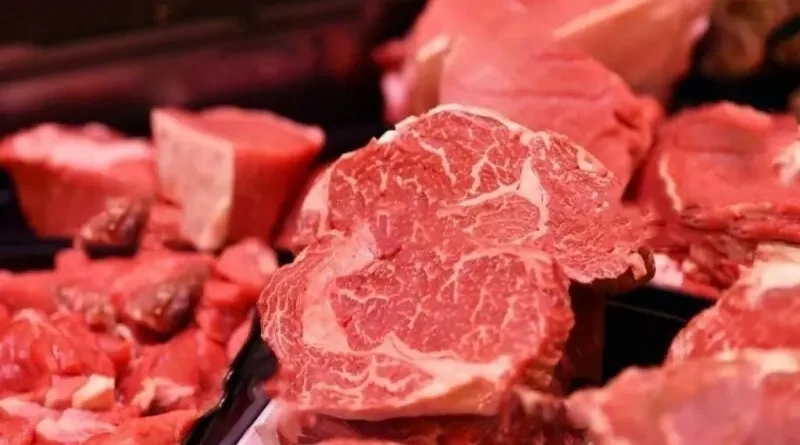
Chinese customs figures show that Pakistan shipped 2.38 million kilograms of boiled beef (HS code 16025090), with a total export value of $14.52 million. Industry insiders said the sharp rise was driven by improved market access for Pakistani meat processors, stronger compliance with Chinese sanitary and halal standards, and rising demand across China’s key consumption centres.
The largest markets within China were economically advanced regions. Jiangsu Province led imports with nearly 1.0 million kilograms valued at $5.08 million, followed by Zhejiang Province at 458,595 kilograms ($3.66 million), and Tianjin with 510,520 kilograms ($3.50 million). Other notable destinations included Guangdong, Xinjiang, Shandong, Hainan, and Hunan. On average, Pakistan’s meat exports were priced at $6.11 per kilogram, offering a competitive balance of price and value-added quality for China’s food processing, catering, and retail sectors.
Experts attribute the rapid increase to several factors, including rising Chinese consumer preference for ready-to-cook and processed meat products, expansion of export-approved slaughterhouses and processing facilities in Pakistan, improvements in cold-chain logistics, smoother customs procedures, and the use of bonded trade channels, especially via Hainan.
By comparison, Mongolia remains China’s largest supplier of prepared bovine meat in this category, exporting 4.37 million kilograms worth $18.53 million at $4.23 per kilogram, aided by geographic proximity and border trade. The United States exported only 18,099 kilograms worth $68,033, reflecting a different product mix and market focus.
Analysts said Pakistan has significant potential to further expand its footprint in China by moving up the value chain with seasoned and portioned products, enhancing cold-chain infrastructure, strengthening branding partnerships with Chinese distributors, and certifying additional processing plants.
Abdullah, a Pakistani meat exporter to China, said the rising demand across coastal and inland provinces signals a structural shift toward more stable, large-scale meat exports, reinforcing the deepening economic and trade cooperation between Pakistan and China.