Briefing: High-Level Engagements, Counterterrorism, and Diplomatic Initiatives
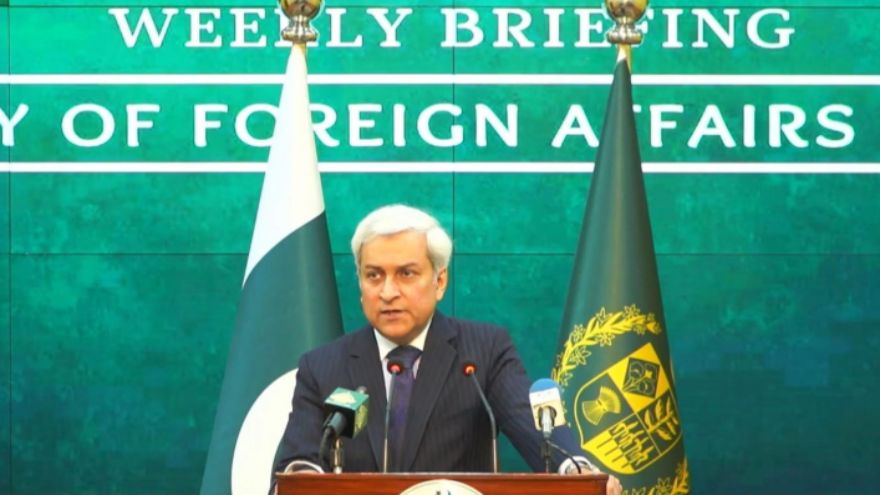
Islamabad : Pakistan’s Ministry of Foreign Affairs held a press briefing outlining recent diplomatic, regional, and security developments. The briefing, led by the Ministry’s spokesperson, reviewed key activities over the past two weeks.
The spokesperson highlighted the State visit of President of Uzbekistan, H.E. Shavkat Mirziyoyev, to Pakistan on 5–6 February, the second such visit, reflecting deepening bilateral relations. Meetings were held with President Asif Ali Zardari, Prime Minister Muhammad Shehbaz Sharif, and the Pakistan-Uzbekistan Business Forum. A Joint Declaration on the Outcomes of the visit was signed, covering trade, investment, industrial zones, and regional connectivity projects including the Uzbekistan-Afghanistan-Pakistan (UAP) Railway. Leaders set a target to raise bilateral trade to USD 2 billion by 2029.
Similarly, President of Kazakhstan, H.E. Kassym-Jomart Tokayev, visited Pakistan on 3–4 February, marking a “new chapter” in bilateral relations. A Joint Declaration establishing a Strategic Partnership was issued. The agreement included institutionalized high-level engagements, security and defense collaboration, joint military exercises, and economic cooperation targeting USD 1 billion trade, alongside plans for enhanced regional transport connectivity. Both sides reaffirmed support for a peaceful resolution of the Jammu and Kashmir dispute per UN Security Council resolutions.
The briefing also noted meetings by Deputy Prime Minister/Foreign Minister Senator Mohammad Ishaq Dar with officials from Azerbaijan, Cambodia, Turkey, Iran, Uzbekistan, and the Commonwealth Secretariat, discussing trade, investment, and regional cooperation. Pakistan hosted the D-8 Informal Retreat in Lahore to strengthen secretariat functions and approve financial and administrative matters ahead of the 12th D-8 Summit in Jakarta.
On security issues, the spokesperson stressed Pakistan’s engagement with the UN Security Council’s 1267 Sanctions Committee report, which validates Pakistan’s position on terrorism originating from Afghanistan, including TTP and Al Qaeda networks. Pakistan remains committed to dialogue while preserving its right to self-defense.
Regarding India, the spokesperson reiterated Pakistan’s legal stance on the Indus Water Treaty, condemning India’s non-compliance and calling for return to treaty obligations. On human rights, Pakistan expressed concern over 55 documented lynching cases against Muslims in India, calling for accountability and international attention.
The Ministry confirmed Pakistan’s support for Iran–US nuclear talks in Oman and emphasized engagement through dialogue and diplomacy. It also clarified the government’s approach to the upcoming Board of Peace meeting in Washington, noting Prime Minister Shehbaz Sharif and the Deputy Prime Minister/Foreign Minister will attend, with further delegation details to be shared later.
Other points addressed included the UAE’s loan rollover to Pakistan, ongoing counterterrorism operations against ISIS-K, and the government’s balanced response to international statements and incidents related to cricket diplomacy, regional security, and bilateral relations.
The spokesperson underscored Pakistan’s commitment to peaceful diplomacy, international legal mechanisms, and proactive engagement on regional security, trade, and connectivity initiatives, while protecting national interests and the rights of its citizens.
#Pakistan #ForeignPolicy #Uzbekistan #Kazakhstan #Afghanistan #India #Security #Diplomacy #diplomatsWorld #diplomatsworld