
A Region in Flux: Pakistan Navigates a Treacherous
Geopolitical Chessboard
By Muhammad Sajjad Haider
The Taliban’s return to power in Afghanistan has resulted in rising tensions and a complex
geopolitical quagmire for Pakistan. The once-cordial relations have deteriorated considerably,
owing mostly to the ongoing issue of cross-border terrorism, forcing Islamabad to traverse a
perilous new environment of shifting alliances and strategic realignments extending from
Kabul to New Delhi and throughout the Middle East.
The Unravelling of a Brotherhood
The Afghan Taliban’s refusal to honour its commitments to prevent its country from being
used for terrorist actions against its neighbours is at the heart of the current conflict. Pakistan
has seen a huge increase in strikes carried out by the Tehreek-e-Taliban Pakistan (TTP), a
proscribed terrorist group that has found refuge and operational freedom in Afghanistan.
Despite several diplomatic entreaties from Islamabad, the Taliban leadership has been
reluctant or unable to control the TTP, with whom it has profound ideological and historical
links.
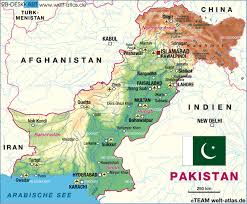
This delay has resulted in a succession of violent cross-border clashes and a complete
collapse of trust, culminating in recent Pakistani airstrikes on TTP hideouts in Afghanistan
and the Pakistani Defence Minister’s declaration of an ‘open war’ with Taliban officials. In a
message, he stated:
“Our cup of patience has overflowed. Now it is open war between us and you.”
Kabul’s Pivot to New Delhi
As relations with Islamabad deteriorated, the Afghan Taliban made a big diplomatic shift
toward India, Pakistan’s arch-rival. This transition is underlined by high-level encounters,
such as Amir Khan Muttaqi, the Taliban’s acting Foreign Minister, visiting India and
reopening the Indian embassy in Kabul. Pakistan has grown increasingly concerned about
this rapprochement, with officials accusing the Taliban of becoming a ‘proxy of India’ and
allowing Afghanistan to wage a low-intensity war against Pakistan.
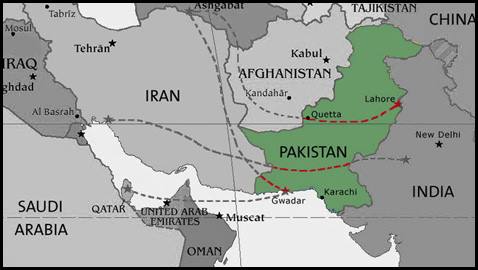
India, for its part, has shifted from enmity toward the Taliban to pragmatic engagement,
motivated by a desire to safeguard its interests and challenge the dominance of Pakistan and
China in the region. This cooperation includes humanitarian aid and infrastructure projects,
indicating a long-term strategic commitment to Kabul’s new leadership.
The India-Israel Nexus:
A Threatening Embrace The fast-increasing strategic cooperation between India and Israel has exacerbated Pakistan’s security concerns. Indian Prime Minister Narendra Modi’s recent visit to Israel reinforced a
‘special strategic alliance’, with a particular emphasis on defence and technology cooperation.
This might include the transfer of modern Israeli military gear, such as the Iron Beam laser
weapon system, to India. Islamabad sees this developing defence alliance as a direct danger,
escalating the South Asian arms race and creating a major strategic imbalance.
Read Also ; China to Send Special Envoy for Middle East Mediation
Analysts point out that the decades-long intelligence collaboration between India’s RAW and
Israel’s Mossad is now being openly strengthened, with a clear focus on fighting perceived
regional threats. Israeli Prime Minister Benjamin Netanyahu’s plan for a ‘hexagon of
alliances’ centred on India is viewed as a framework for confronting a so-called ‘radical Sunni
axis’, a thinly veiled allusion to countries such as Pakistan, Türkiye, and their allies.
A Fractured Gulf: The Abraham Accords and the ‘Trojan Horse’
The geopolitical chessboard is further complicated by profound splits within the Gulf
Cooperation Council. The United Arab Emirates’ decision to normalise relations with Israel
under the Abraham Accords has caused a major schism with Saudi Arabia. This conflict has
escalated into a battle of words, with prominent Saudi politicians accusing the UAE of
becoming Israel’s ‘Trojan horse’ in the Arab world, supporting Zionist objectives by
weakening Saudi Arabia and gaining regional domination.
The Saudi-UAE rivalry has significant ramifications for Pakistan. While Pakistan has long
had strong ties with both countries, the UAE has also been increasing its strategic and
economic ties with India. Discord in the Gulf, fuelled by conflicting attitudes to Israel,
complicates Pakistan’s foreign policy, pushing it to strike a difficult balance between its
historic friends and the region’s new realities.
A Perilous Path Forward
Pakistan finds itself in the midst of a perfect storm. The dream for a peaceful and friendly
Afghanistan under the Taliban has given way to the reality of a hostile neighbour spreading
terrorism. The strategic encirclement of an increasingly aggressive India, supported by a solid
alliance with Israel, is a growing threat. Simultaneously, the shifting sands of Middle Eastern
politics, with the UAE’s support for Israel generating a schism with Saudi Arabia, create an
uncertain and combustible situation.
Navigating the complicated web of alliances and rivalries will necessitate savvy and effective
diplomacy from Islamabad. The hurdles are enormous, and the route ahead is loaded with
danger. Pakistan must safeguard its borders, combat terrorism, and rebalance its foreign
policy to conform to a regional order that is being transformed in front of its eyes.
The writer is a former member of a law enforcement agency of Pakistan and can be reached through
his email: janjuha@hotmail.com