Iran Rejects Surrender, Warns Against Aggression
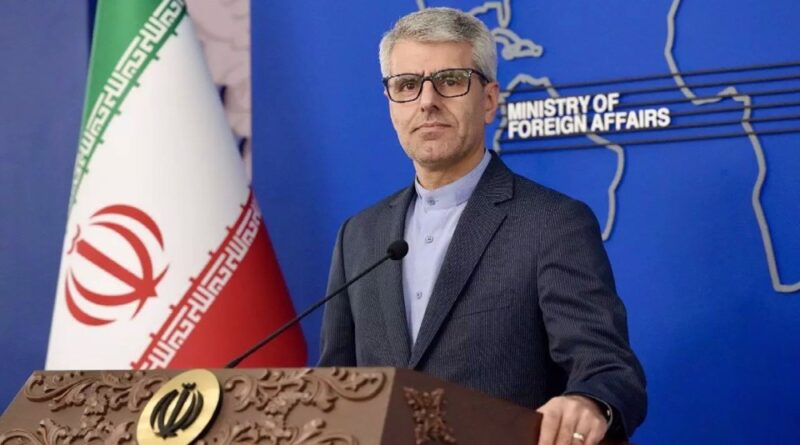
Iran’s Foreign Ministry spokesman Esmaeil Baghaei said Tehran does not recognize the concept of surrender and will not accept any violation of its territory. His remarks came during a press briefing in Tehran, where he reiterated Iran’s position on national sovereignty and security.
Baghaei stated that Iran will exercise its right to self-defense and respond to any act of aggression. He emphasized that any hostile move against the country would be met with an appropriate reaction, underscoring Tehran’s readiness to counter perceived threats.
Addressing ongoing diplomatic efforts, the spokesman said Iran sees no benefit in prolonged and exhausting negotiations. He made clear that in any potential nuclear agreement, the interests of the Iranian people represent a red line that cannot be crossed. According to him, national priorities and sovereignty will guide Tehran’s approach to discussions with international counterparts.
Baghaei also warned that European military forces deployed in the region would be regarded as terrorists. He added that any U.S. action, including limited strikes, would be considered an act of aggression. His comments reflect escalating rhetoric amid continued tensions over Iran’s nuclear program and regional security concerns.
Separately, Iranian President Masoud Pezeshkian indicated that there have been encouraging signals in talks with the United States. In a statement posted on the social media platform X, the president said Iran remains committed to promoting peace and stability in the region.
Pezeshkian noted that recent negotiations involved the exchange of practical proposals and described the discussions as constructive. He emphasized that Iran is closely monitoring U.S. actions while continuing diplomatic engagement.
The president also stated that Iran has completed all necessary preparations for any possible scenario. While signaling openness to dialogue, he stressed that vigilance remains essential as developments unfold.
The contrasting tones between the Foreign Ministry and the presidency illustrate Iran’s dual-track approach. On one hand, officials have delivered strong warnings against external intervention and reiterated that sovereignty is non-negotiable. On the other, the president has highlighted positive signals from diplomatic contacts and reaffirmed Iran’s commitment to regional stability.
Baghaei’s comments about European forces and potential U.S. strikes come amid heightened regional tensions and ongoing debates surrounding Iran’s nuclear activities. His assertion that limited military action would constitute aggression suggests that Tehran views any use of force as a serious escalation.
Meanwhile, President Pezeshkian’s remarks underscore a willingness to pursue diplomatic channels, provided Iran’s national interests are safeguarded. By emphasizing preparedness for all scenarios, he conveyed that while diplomacy remains an option, Iran is prepared to respond decisively if necessary.
Together, the statements reflect a cautious yet firm posture from Tehran—one that combines diplomatic outreach with strong warnings against military action. As discussions with the United States continue, Iran’s leadership appears determined to balance engagement with vigilance, keeping its strategic interests at the forefront of any potential agreement.