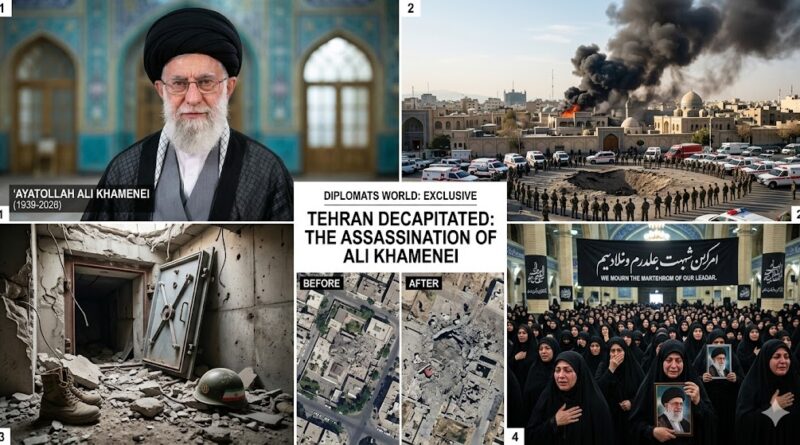
Israeli Airstrike in Tehran Claims Life of Supreme Leader Ali Khamenei
Washington Post Reveals Details of Decapitation Strike in Tehran
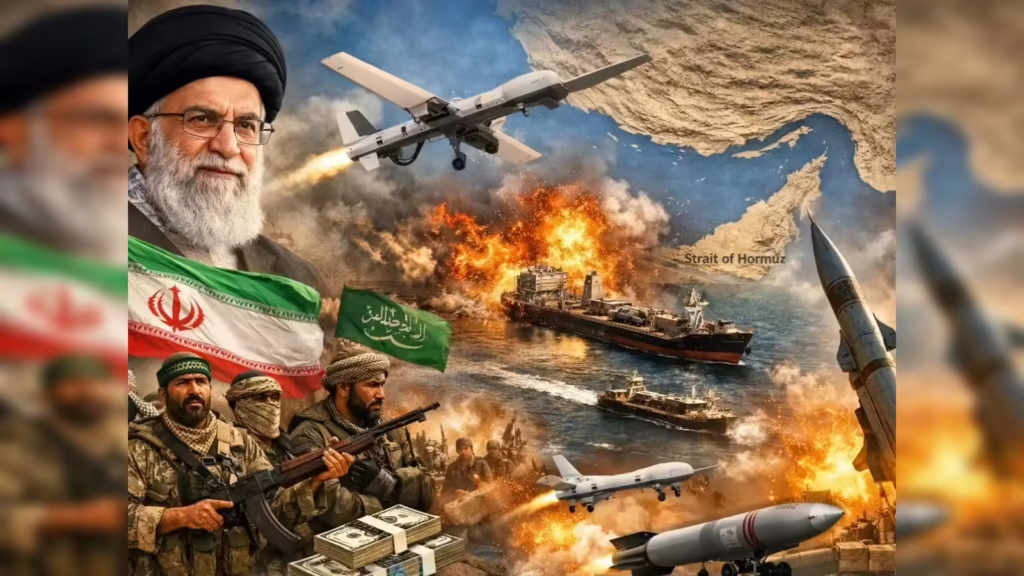
New details have emerged regarding the assassination of Iran’s Supreme Leader, Ayatollah Ali Khamenei, during a high-precision Israeli military operation in Tehran on February 28, 2026. According to a report by the Washington Post, American and Israeli military commanders had designated the elimination of Iran’s top leadership as a primary objective from the earliest stages of their strategic planning. The responsibility for executing this “decapitation strike” was specifically assigned to Israel, leveraging its decades of clandestine intelligence experience and specialized military expertise. This targeted action followed a year-long, intensive surveillance operation dubbed the “Group of Five,” which maintained constant monitoring of Khamenei and his inner circle to identify a moment of maximum vulnerability.
Morning Strike Targets Top Defense and Military Leadership
The operation, executed by Israeli fighter jets, struck a residential complex in central Tehran on the morning of February 28. Intelligence reports indicate that Israeli security officials had originally planned the strike for the evening but adjusted the timing at the last moment after learning that a high-level meeting had been rescheduled to the morning. The resulting missile barrage not only ended Ayatollah Ali Khamenei’s 37-year rule but also claimed the lives of several key figures in the Iranian establishment. Reports confirm that the heads of the Defense Council, the Armed Forces, the Islamic Revolutionary Guard Corps (IRGC), and the Ministry of Defense were present and were killed alongside the Supreme Leader.
Leadership’s Decision to Avoid Underground Bunkers Proves Fatal
In a surprising tactical error, the Iranian leadership reportedly chose to hold their strategic meeting in an above-ground residence rather than moving to fortified underground bunkers. This decision was made despite clear signs of an imminent conflict, including a visible increase in U.S. military movements in the region and heightened war rhetoric. Analysts suggest that the leadership may have underestimated the precision of Israeli intelligence or the audacity of a daylight strike in the heart of the capital. The choice to remain in a vulnerable structure provided the Israeli Air Force with a clear, high-value target that resulted in the near-total elimination of Iran’s command-and-control hierarchy.
Mojtaba Khamenei Narrowly Escapes Death in Targeted Compound
While the Supreme Leader was killed, his son and designated successor, Mojtaba Khamenei, survived the attack by a narrow margin. The Washington Post reported that Mojtaba was present within the same residential complex but had stepped into an adjacent garden just moments before the missiles impacted the main building. This brief departure from the meeting room proved to be the decisive factor in his survival. However, the survival was bittersweet, as reports indicate that his wife and daughter were killed in the explosion. Mojtaba himself sustained significant injuries to his limbs, leading to a prolonged absence from public view while receiving medical treatment.
Intelligence Precision and Last-Minute Tactical Adjustments
The success of the operation has been attributed to the extreme accuracy of Israeli intelligence, which provided real-time data on the exact location of the “Group of Five.” The ability of Mossad and military intelligence to track the rescheduling of a private leadership meeting allowed the Israeli Air Force to strike when all high-value targets were gathered in a single location. This level of penetration into Iran’s most secure communication channels has sent shockwaves through the regional security apparatus. The precision of the strike serves as a stark reminder of the technological gap and the deep infiltration of intelligence networks within Tehran’s high-security zones.
Mojtaba Khamenei Appointed as Successor Amid National Mourning
In the aftermath of the strike, the Assembly of Experts moved quickly to maintain government continuity by appointing Mojtaba Khamenei as the new Supreme Leader of Iran. Despite his severe injuries and personal loss, his appointment was seen as a way to ensure the survival of the Khamenei legacy and the stability of the Islamic Republic’s ideological framework. Following the official confirmation of Ali Khamenei’s death, the Iranian government announced 40 days of mourning and a week of public holidays. The transition marks the most significant shift in Iranian leadership since 1989, occurring under the shadow of ongoing military conflict and unprecedented internal and external pressure.
read more ; Trump Seeks Rapid End To Conflict With Iranian Leadership