
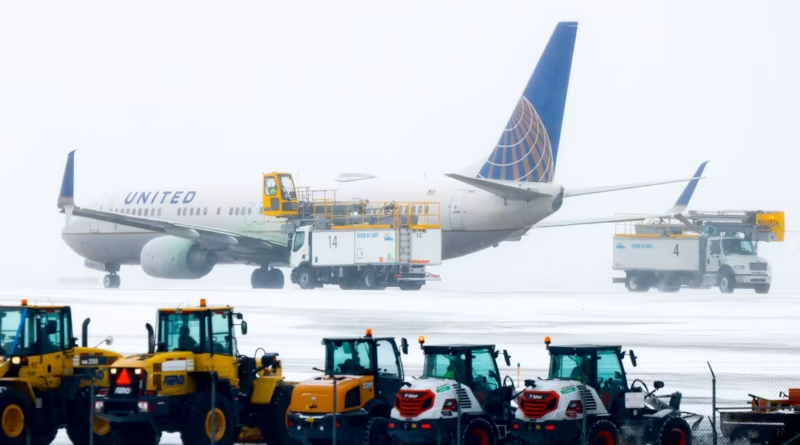
Major Winter Storm Forces 8,000+ Flight Cancellations Across U.S.
DALLAS : A major winter storm sweeping across the United States has led to the cancellation of over 8,000 flights this weekend and prompted widespread emergency warnings, as millions brace for heavy snow, ice, and frigid temperatures.
The National Weather Service issued winter storm warnings affecting roughly 140 million people, from New Mexico to New England, warning of catastrophic ice, heavy snow, and strong winds. Meteorologists predict damage could rival that of a hurricane in areas hardest hit by ice.
By Friday evening, the storm’s leading edge brought freezing rain and sleet to Texas and snowfall to Oklahoma. Over the weekend, it is expected to hit the Northeast, with forecasts calling for up to 30 centimeters (one foot) of snow from Washington, D.C., through New York and Boston.
Governors in over a dozen states have declared emergencies or urged residents to stay home. Texas Governor Greg Abbott instructed residents to remain indoors if possible while state crews pretreated roads.
Air travel disruption has been severe. According to FlightAware, more than 3,400 flights were delayed or canceled Saturday, with an additional 5,000 flights affected Sunday. Travelers are seeking alternate routes, including re-routing through distant hubs.
Utility companies are preparing for power outages, as ice accumulation on trees and power lines poses ongoing risks. In the Midwest, wind chills reached minus 40 degrees Fahrenheit, creating a dangerous frostbite threat. Residents like Colin Cross in Bismarck, North Dakota, took extra precautions to handle the icy conditions while working outdoors.
Federal agencies are mobilizing. FEMA has positioned 30 search-and-rescue teams, more than 7 million meals, 600,000 blankets, and 300 generators in preparation for the storm’s impact. President Donald Trump confirmed via social media that the administration is coordinating with state and local officials and that FEMA is fully prepared to respond.
The storm has already affected daily life across the South. Many churches moved services online, the Grand Ole Opry in Nashville held a performance without fans, and several carnivals and parades in Louisiana were canceled or rescheduled. School closures were announced in Philadelphia, while universities across the South—including the University of North Carolina at Chapel Hill, University of Mississippi, and University of Georgia—either canceled classes or advised students to remain on campus.
Officials warned that even after the storm passes, ice-laden power lines and tree branches will continue to pose hazards, with some areas facing extended power outages. Utilities are bringing in thousands of staff to maintain service, learning lessons from a similar cold snap five years ago, which left millions without power and caused hundreds of fatalities.
The storm underscores the ongoing vulnerability of the U.S. to extreme weather events, combining heavy snow, ice, and freezing temperatures with disruptions to transportation, utilities, and daily life.