Minister Launches BISP Nashonuma Dashboard Initiative
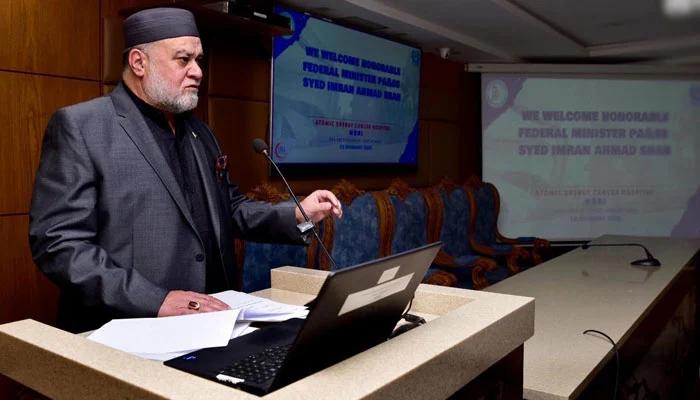
Federal Minister for Poverty Alleviation and Social Protection Syed Imran Ahmed Shah addressed the inauguration ceremony of the Benazir Nashonuma Programme dashboard, describing it as a major step forward in promoting transparency and results-based policymaking in social protection initiatives.
The minister said Pakistan is facing a serious challenge of malnutrition and stunting, particularly among children. Citing national survey data, he noted that more than 40 percent of children under the age of five suffer from stunting, underscoring the urgent need for targeted interventions focused on early childhood nutrition and maternal health.
He emphasized that the government’s poverty alleviation strategy is fundamentally rooted in human development and early nutrition. According to the minister, investing in children’s health and well-being is essential for breaking the cycle of poverty and ensuring long-term socio-economic progress.
Under the Benazir Nashonuma Programme, conditional financial assistance linked to health and nutrition is being provided to eligible families. The initiative operates through the Benazir Income Support Programme (BISP), which serves as the primary platform for delivering social protection benefits to vulnerable segments of society.
The minister stated that more than 4.3 million mothers and children have benefited from the Nashonuma Programme to date. He added that independent research has demonstrated positive outcomes associated with the program, reinforcing its role as a key component of Pakistan’s social protection framework.
Highlighting the importance of data-driven governance, the minister said the newly launched real-time dashboard will enhance monitoring, improve transparency, and enable timely decision-making. By providing up-to-date information on program performance and beneficiary outreach, the system is expected to strengthen accountability and ensure that resources are used effectively.
He stressed that social protection should not be viewed as charity but rather as an investment in human capital. According to the minister, sustainable development requires consistent support for vulnerable populations, particularly women and children, to help them achieve improved health and nutritional outcomes.
The minister acknowledged the technical support provided by implementing partners, including the World Food Programme, UNICEF, and the World Health Organization. He noted that their collaboration has contributed to the effective implementation of the Benazir Nashonuma Programme and strengthened its operational capacity.
Reaffirming the government’s commitment, the minister pledged to ensure transparency, quality, and accountability across all social protection programs. He said continuous improvements in governance mechanisms and oversight tools will remain a priority to maximize impact and public trust.
Concluding his remarks, the minister stated that the Government of Pakistan remains determined to secure a healthy and safe future for children. He reiterated that addressing malnutrition and stunting is central to national development goals and that sustained efforts will continue to support the country’s most vulnerable families.