No Talks with Militants, State Will Respond with Full Force, Khawaja Asif
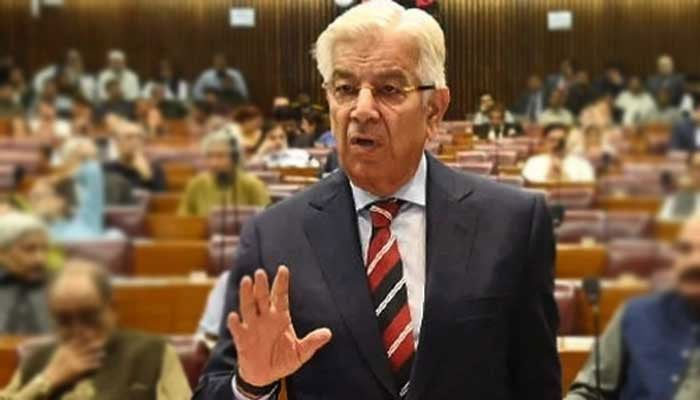
Islamabad : Defence Minister Khawaja Asif on Monday categorically ruled out any negotiations with militant groups, stating that terrorism would be confronted with the full force of the state and that no individual or group would be allowed to challenge the writ of the government.
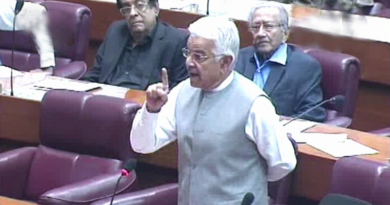
Speaking on the floor of the National Assembly, Khawaja Asif said militants had no control over any area of Balochistan and warned that the state would not permit violence under any pretext. He urged political forces to set aside their differences and unite against terrorism, stressing that security was a collective national responsibility.
Rejecting claims of deprivation in Balochistan, the defence minister termed the narrative “baseless,” citing recent attacks including the killing of labourers aboard the Jaffer Express. “What kind of ideology justifies the killing of innocent people?” he asked.
Khawaja Asif said the deteriorating law and order situation in Balochistan was driven by multiple factors, including criminal networks and smugglers. He stated that when the state tightened its grip on criminals and smugglers, they responded by taking up arms. While negotiations had previously been held with Baloch political parties, he clarified that the 177 criminals killed in recent operations had no political affiliation.
He said criminal elements had formed a nexus, exploiting political cover to protect illegal activities. Highlighting the scale of the challenge, Asif noted that Balochistan constitutes 40 percent of Pakistan’s total landmass, requiring a large security presence to maintain stability.
The defence minister questioned the source of sophisticated weapons used by militants, claiming they possessed expensive US-made arms, with individual rifles costing up to Rs2 million. He alleged that India was backing militant proxies in Balochistan, recalling the arrest of Kulbhushan Jadhav from the province. He further claimed that militant leadership was based in Afghanistan and received support from there.
Asif said recent terror attacks were linked to the disruption of oil smuggling operations. He alleged that smuggled Iranian oil, purchased at Rs40 per litre, was being sold in Karachi at Rs200 per litre, generating daily profits of nearly Rs4 billion. When the state blocked this illegal trade, he said, criminal groups retaliated by destabilizing law and order.
He accused Baloch Liberation Army (BLA) militants of acting as protectors of smugglers, asserting that those involved in violence and corruption could not be engaged through dialogue. “We must stand behind the Pakistan Army and confront terrorism together,” he said.
Highlighting development in the province, Khawaja Asif said Balochistan had faced security challenges for three decades but had seen major infrastructure growth. He noted that at the time of Pakistan’s independence, the province had only a few hundred kilometres of roads, compared to 26,000 kilometres today.
He added that Balochistan now has 15,096 schools, 13 cadet colleges, and 13 major hospitals. The province’s share under the National Finance Commission (NFC) stands at Rs933 billion, he said, alleging that the tribal system had historically exploited provincial resources.
Asif also said Balochistan has more airports than any other province and that efforts were underway to make non-operational airports functional.
Pakistan #Balochistan #Terrorism #NationalAssembly #Security #KhawajaAsif #PakistanArmy #LawAndOrder #CounterTerrorism #RegionalSecurity #diplomatsWorld