Pakistan SOEs Post Aggregate Loss of Rs832bn in FY25
ISLAMABAD: Net losses of Pakistan’s State-Owned Enterprises (SOEs) surged by 300 per cent in FY2025, with 25 entities posting an aggregate loss of Rs832 billion, according to a report released by the Finance Ministry of Pakistan.
The report said net losses climbed to Rs123 billion in FY25, compared to Rs30.6 billion in FY24, reflecting a sharp deterioration in the financial performance of the SOE sector.
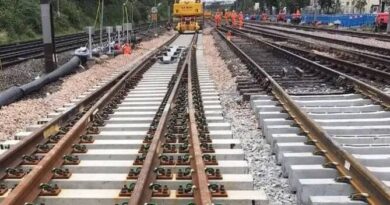
The highest loss was recorded by the National Highway Authority at Rs294.9 billion. Other major loss-making entities included Quetta Electric Supply Company with losses of Rs112.7 billion, Peshawar Electric Supply Company at Rs92.7 billion, Pakistan Railways with Rs60.3 billion, and PIA Holding Company Limited at Rs48.9 billion during FY2025.
According to the SOEs report, additional significant losses were incurred by National Power Parks Management Company (Rs46.1 billion), Neelum-Jhelum Hydropower Company (Rs29.4 billion), Pakistan Steel Mills (Rs26 billion), and Sukkur Electric Power Company (Rs25.3 billion).
Further losses were reported by Pakistan Post Office (Rs19.3 billion), Pakistan Agricultural Storage and Services Corporation (Rs19 billion), Hyderabad Electric Supply Company (Rs12.9 billion), Lahore Electric Supply Company (Rs12.7 billion), and GENCO-II (Rs10.3 billion). Smaller losses were recorded by National Insurance Company, CPPA-G, Islamabad Electric Supply Company, Pakistan Television Corporation, Private Power and Infrastructure Board, Pakistan Expo Centres, Hazara Electric Supply Company, National Construction Limited, and Pakistan Broadcasting Corporation.
In contrast, profit-making SOEs posted an aggregate profit of Rs709 billion in FY2025, with earnings heavily concentrated among a limited number of entities. The largest contributor was Oil and Gas Development Company Limited with profits of Rs169.9 billion, followed by Pakistan Petroleum Limited at Rs89.9 billion, National Bank of Pakistan with Rs56.7 billion, Water and Power Development Authority at Rs52.3 billion, and Government Holdings (Private) Limited at Rs48.5 billion.
Other notable profit earners included Karachi Port Trust, Port Qasim Authority, Pak Arab Refinery Company, Pakistan National Shipping Corporation, State Life Insurance Corporation, SNGPL, Pakistan State Oil, Gujranwala Electric Power Company, Zarai Taraqiati Bank Limited, Saindak Metals, NTDC, SSGPL, and PIACL. Overall, a small group of SOEs accounted for nearly 90 per cent of total profits, highlighting a high degree of earnings concentration within the sector.
The FY2025 balance sheet of SOEs showed mixed trends. Total equity increased by 7 per cent to Rs6,245.7 billion, driven largely by recapitalisation and equity injections, particularly in the power sector to address circular debt. Total liabilities declined by 3 per cent to Rs31,742.4 billion, while total assets remained broadly stable, edging down by 1 per cent to Rs37,988.1 billion.
Government fiscal support to SOEs rose by 37 per cent to Rs2,078.5 billion in FY2025. This increase was primarily driven by equity injections amounting to Rs728.9 billion, linked to one-off power sector circular debt clearance and payments to independent power producers. Government loans to SOEs also increased by 34 per cent to Rs354.1 billion.
In contrast, grants declined by 27 per cent to Rs269.2 billion, while subsidies fell by 7 per cent to Rs726.3 billion. Sovereign guarantees rose sharply by 52 per cent to Rs2,164 billion, largely due to the accounting of self-liquidating guarantees on stock rather than the issuance of new guarantees.
During FY2025, the federal government collected Rs12,970 billion in tax revenue, of which around Rs2,078 billion, or nearly 16 per cent, was channelled back to SOEs through subsidies, equity injections, grants, and loans.
PakistanEconomy #SOEs #PublicFinance #FiscalPressure #PowerSector #EconomicPolicy #diplomatsWorld #diplomatsworld