
Pakistan’s Inflation Fight Is Over But the Reserve Crisis Isn’t
By Naeem Mehboob :
Pakistan’s central bank decision to hold the policy rate steady this week may have surprised some market observers, but the rationale behind the move reflects a deeper and more strategic assessment of the country’s economic recovery path.
In its policy narrative, the State Bank of Pakistan effectively signaled that the fight against inflation has largely been won. However, the more difficult battle rebuilding the external sector and restoring foreign exchange stability remains unfinished, despite measurable progress.
These two fronts form the core of Pakistan’s struggle against the economic volatility that began in July 2023, when the country stood perilously close to sovereign default. An extraordinary international rescue coordinated by the IMF with support from China, Saudi Arabia, and the United Arab Emirates prevented a collapse that could have shut down the economy within weeks. Yet, collective memory in Pakistan tends to move quickly past crises that nearly overwhelm the system.
At that moment, two urgent tasks emerged. The first was to extinguish the inflationary spiral that began in early 2021 and culminated in May 2023, when inflation surged to an unprecedented 38 percent year-on-year. The second was to stabilize the currency after a historic wave of devaluations that began in 2021, eventually pushing the dollar to nearly triple in value against the rupee — the sharpest depreciation in the country’s economic history.
Two successive IMF programs were required to reverse that near-catastrophic instability. The Stand-By Arrangement in July 2023 provided emergency stabilization, followed by the Extended Fund Facility (EFF) launched in September 2024, which remains in place today. The structure and targets of the EFF itself confirm that Pakistan is still navigating a high-risk recovery phase.
The most fragile front remains foreign exchange reserves.
When the EFF began, Pakistan’s Net International Reserves (NIR) stood at negative $11 billion meaning the country’s short-term external liabilities exceeded its total reserve assets by that amount. This figure had first turned negative in 2017, briefly recovered to the zero line, and then collapsed again as external imbalances widened during the growth phase of the late 2010s and early 2020s.
Under IMF benchmarks, Pakistan was expected to restore NIR to positive territory by 2028. On paper, progress has been faster than scheduled. By September 2025, NIR had improved to negative $6.6 billion, and projections suggest it could reach negative $4.8 billion by June this year if current trends persist.
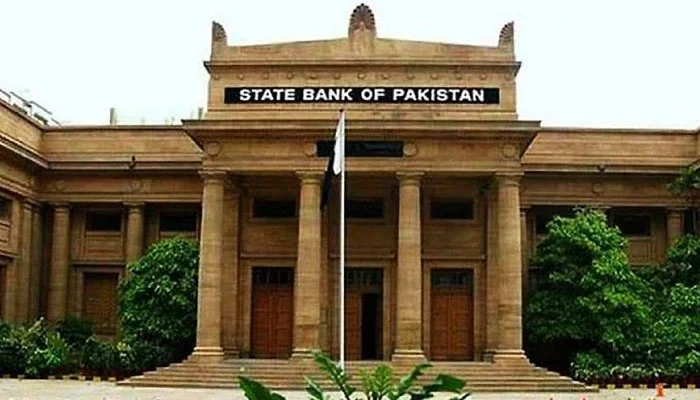
This improvement is significant but the figure remains negative. In practical terms, Pakistan still owes more in foreign currency than it holds. As long as that imbalance persists, sustainable growth remains structurally constrained.
This explains the State Bank’s aggressive accumulation of foreign exchange. Its heavy dollar purchases from commercial banks often at administratively influenced prices reflect an institutional urgency to rebuild reserves. In September and October 2025 alone, the central bank absorbed more than $1 billion each month, exceeding IMF accumulation targets an unusual pace by historical standards.
But rebuilding reserves is only one side of the equation. The other is reducing external liabilities accumulated during the 2022–2023 crisis. That dual process — reserve accumulation and liability retirement — will likely continue for another 12 to 18 months at minimum.
This is precisely why the central bank is reluctant to stimulate growth too aggressively.
In its monetary policy statement, the State Bank acknowledged that “economic activity continues to gain momentum faster than anticipated” and warned that “the trade deficit has widened in the wake of a substantial increase in imports.” It upgraded its growth forecast to 3.75–4.75 percent and projected further momentum into FY27, but with clear caution.
From July to December, the current account recorded a deficit of $1.2 billion. While manageable, such trends can escalate rapidly. A widening trade deficit at this stage would directly undermine reserve accumulation and destabilize external accounts.
This is the strategic logic behind the rate pause.
Inflation has been contained. That battle has been won. But the war against external vulnerability is still being fought and until reserves turn decisively positive, Pakistan’s economic recovery remains incomplete.
The State Bank’s decision reflects not hesitation, but restraint a recognition that premature acceleration could undo hard-won stability. For now, rebuilding buffers matters more than fueling momentum.
PakistanEconomy #StateBank #IMF #EconomicRecovery #ForeignReserves #MonetaryPolicy #TradeDeficit #CurrentAccount #FinancialStability #GlobalEconomy #diplomatsWorld