Sharaa-Putin Meeting Focuses on Bilateral Ties and Middle East Security
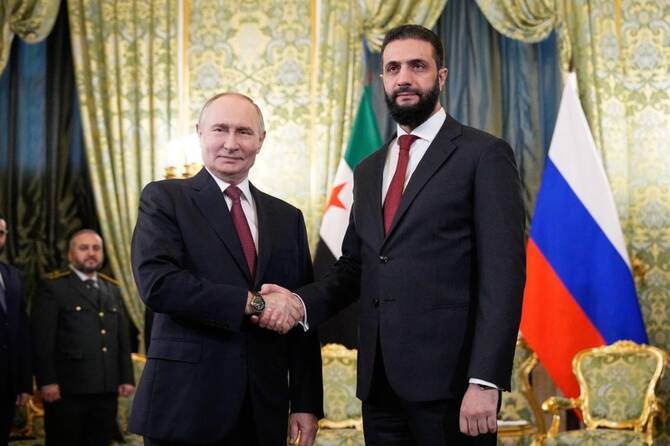
Syrian President Ahmed Al-Sharaa is set to meet Russian President Vladimir Putin in Moscow on Wednesday, as the Kremlin seeks to safeguard the future of its remaining military bases in Syria.
The upcoming meeting comes after a conciliatory encounter in October, which was the first since Sharaa’s rebel forces toppled long-time Moscow ally Bashar Assad in 2024. While Russia has provided shelter to Assad and his wife since their ouster—a point of contention for Sharaa, who has repeatedly sought their extradition—the two leaders are expected to discuss broader bilateral relations and regional security issues.
Sharaa has cultivated a positive rapport with U.S. President Donald Trump, who recently described him as “highly respected” and noted that diplomatic relations with Syria were “working out very well.”
For Russia, maintaining a military presence in the Middle East is a strategic priority despite diminishing influence following Assad’s overthrow. Earlier this week, Moscow withdrew its forces from the Qamishli airport in northeast Syria, leaving only the Hmeimim air base and Tartus naval base on the Mediterranean coast—Russia’s sole military outposts outside the former Soviet Union.
The Kremlin stated that discussions will focus on “the status of bilateral relations and prospects for developing them in various fields, as well as the current situation in the Middle East.”
Russia had been a key ally of Assad during Syria’s 14-year civil war, conducting airstrikes against Sharaa’s rebel-held territories. Assad’s removal marked a significant setback for Russian influence in the region, highlighting the limitations of Moscow’s military reach amid the ongoing conflict in Ukraine.
The United States, supportive of Assad’s ouster, has cultivated increasingly warm ties with Sharaa, even as Damascus launched recent operations against Kurdish forces previously backed by the West. However, both Washington and European capitals have expressed concern that the northeast offensive could enable Islamic State prisoners to escape from Kurdish-held detention facilities.