Uzbekistan and Pakistan Move Toward an Integrated Industrial Corridor
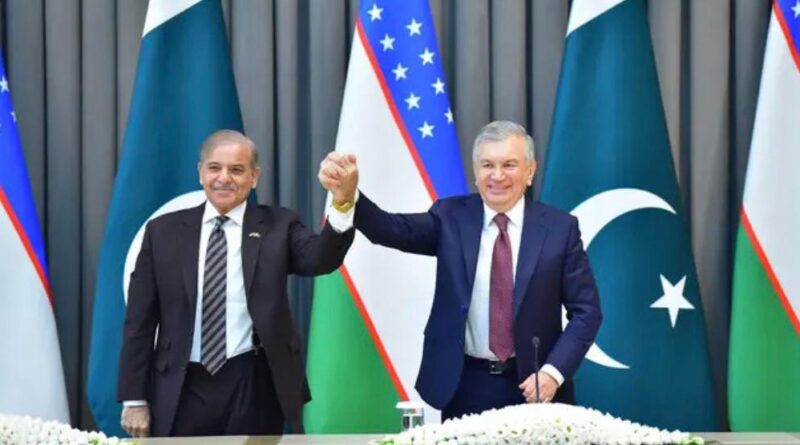
Islamabad; (by Naeem Mehboob ) Uzbekistan and Pakistan are steadily advancing a strategic partnership focused on trade, investment, and industrial cooperation, with bilateral engagement in recent years acquiring a more structured and sustainable character. While existing indicators reflect notable progress, they also point to significant untapped potential. A growing institutional framework and the acceleration of joint projects have created favourable conditions for further expansion in mutual trade and investment.
By the end of 2025, bilateral trade turnover reached USD 446 million, marking a 9.4 percent increase. Uzbekistan’s exports accounted for USD 325 million, generating a positive trade balance exceeding USD 200 million. The composition of trade highlights the agro-industrial complementarity between the two economies. Uzbekistan’s exports to Pakistan are dominated by legumes, representing around 70 percent of supplies, alongside grain products, cotton yarn, transport services, and selected agricultural raw materials and chemical products.
Pakistan’s exports to Uzbekistan are mainly concentrated in pharmaceuticals and food products, including potatoes and meat, as well as metallurgical goods, textile items, light industry products, and medical equipment.
The preferential trade regime continues to expand. The number of tariff lines has been increased to 92, while quarantine permits have been secured for four additional agricultural products, raising the total to 29. Six more permits are planned for the current year, laying the groundwork for a broader product range and reduced trade barriers.
Investment cooperation has entered a more systemic phase. As of January 1, 2026, 230 enterprises with Pakistani capital were operating in Uzbekistan, including 80 companies established during the past year. Among the major projects are a USD 72 million textile cluster in Namangan region with the participation of Diamond Group, and a USD 25 million pharmaceutical plant in Syrdarya region implemented by Getz Pharma.
Further momentum was generated by the 10th session of the Intergovernmental Commission held on February 2, 2026, in Islamabad. During the meeting, the Pakistani side officially described Uzbekistan as a key and priority partner in Central Asia and announced the establishment of a dedicated internal committee to ensure systematic cooperation across all sectors.
In the textile industry, a project portfolio worth USD 211.5 million has been formed with the participation of Diamond Group of Industries, Siddiqsons Group, Diners, and other partners. In pharmaceuticals, agreements totaling USD 125 million have been prepared with ten companies for the production of socially significant medicines. In the leather sector, documents are planned to be signed with twelve companies worth USD 88 million within the framework of a business forum. In food security, a USD 35 million project portfolio has been developed with the involvement of Engro Corporation, Fauji Group, and National Fruit Company.
Geological cooperation is also progressing, particularly in critical minerals such as antimony, copper, and gold. An agreement has been signed between Habib Rafiq Pvt. Ltd. and Uzbek Geology Overseas to carry out geological exploration activities.
Transport connectivity remains a central pillar of the long-term strategy. Progress continues on the Trans-Afghan railway, with agreements in place to begin fieldwork in March, complete the feasibility study by July, and conduct joint roadshows in the Middle East to mobilize financing.
Pakistan has also proposed Uzbekistan’s inclusion in a transit agreement along the Pakistan–China–Kyrgyzstan–Kazakhstan route. The initiative introduces a through-container transport mechanism from Karachi without reopening containers in transit countries, significantly improving logistics predictability and competitiveness.
In 2025, total cargo transportation volume reached 557.5 thousand tons, including 144.5 thousand tons by rail and 412.8 thousand tons by road. Air connectivity has also expanded, with the number of flights increased to four per week on the Lahore and Islamabad routes.
In the financial sector, correspondent relations have been established between the National Bank of Uzbekistan and Meezan Bank, while the opening of a subsidiary of the National Bank of Pakistan in Uzbekistan is under consideration. These steps are expected to facilitate settlements, project financing, and trade operations.
Looking ahead, cooperation is increasingly oriented toward the creation of a full-fledged industrial corridor targeting third-country markets. This approach envisions the integration of production chains, logistics infrastructure, and financial mechanisms into a unified export-oriented model.
Key opportunities include deeper textile collaboration with international brand participation, expansion of contract manufacturing, and joint entry into European, Middle Eastern, and Asian markets. The localization of pharmaceutical production, particularly socially significant medicines, along with the development of joint research and development platforms, also remains a priority.
Further potential lies in establishing leather industrial zones with international operators, creating agro-industrial clusters with deep processing of rice, meat, potatoes, and legumes, and advancing geological exploration, metallurgical projects, and energy initiatives. Parallel efforts focus on customs digitalization, electronic trading platforms, joint logistics hubs with access to Karachi and Gwadar ports, and stronger banking and insurance support for cross-border projects.
At the regional level, prospects are expanding through the creation of a Regional Forum, with its first meeting scheduled in Khiva. The initiative will involve eight provinces of Pakistan and regions of Uzbekistan, giving bilateral cooperation a practical interregional dimension.
The restructured working format of the Intergovernmental Commission, featuring monthly working group meetings and quarterly interim sessions of co-chairs, is designed to ensure effective coordination and sustained implementation.
Overall, Uzbekistan–Pakistan relations are evolving from a primarily trade-based model toward a comprehensive investment and industrial framework. If current momentum is maintained, achieving a USD 2 billion trade turnover emerges as a strategically grounded and attainable objective.
Pakistan #Uzbekistan #Trade #Investment #IndustrialCorridor #RegionalConnectivity #CentralAsia #SouthAsia #diplomatsWorld