WMO Warns Earth Climate System Reaching Dangerous Limits
A new report by the World Meteorological Organization has warned that the Earth’s climate system is being pushed beyond its limits, with key indicators showing unprecedented levels of imbalance.
Eleven Hottest Years Recorded as Global Temperatures Rise
According to the WMO’s State of the Global Climate 2025 report, the planet is now more out of balance than at any time in recorded history. Rising concentrations of greenhouse gases are continuing to warm the atmosphere and oceans while accelerating the melting of ice. The report notes that these rapid changes have taken place over just a few decades but could have consequences lasting hundreds or even thousands of years.
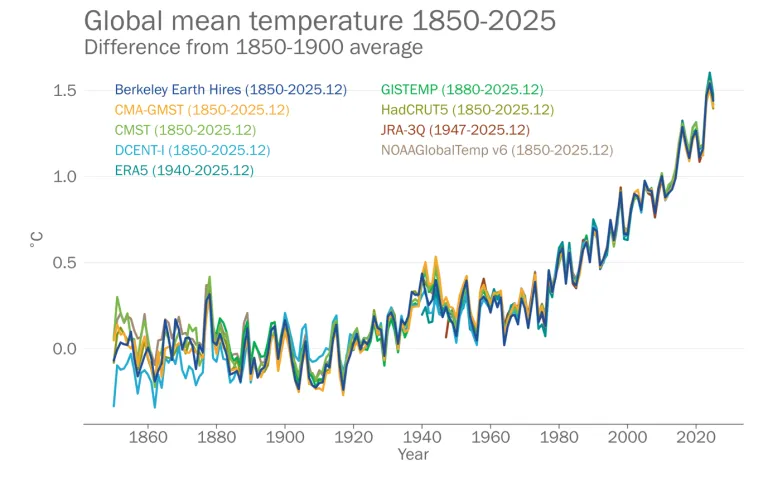
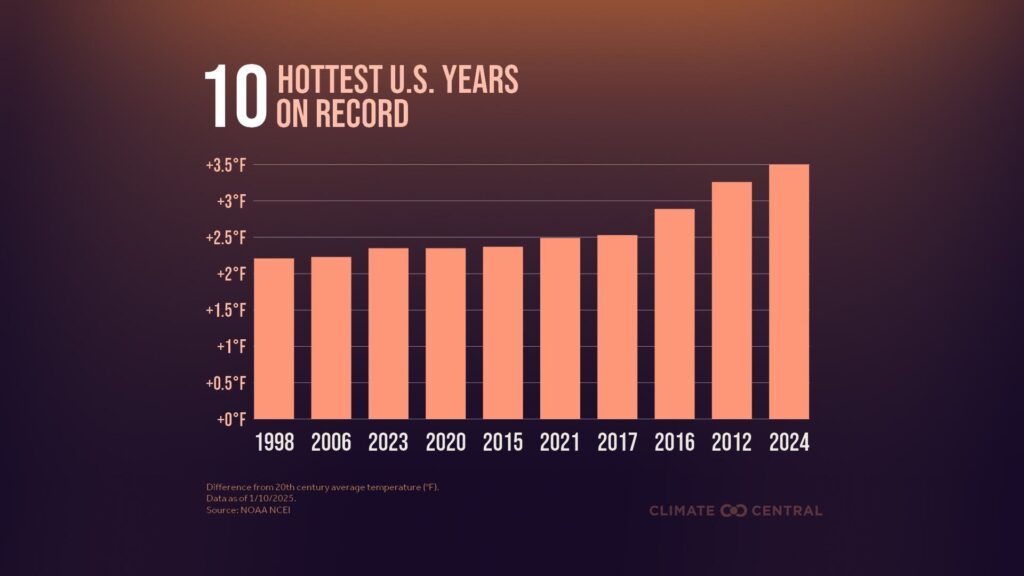
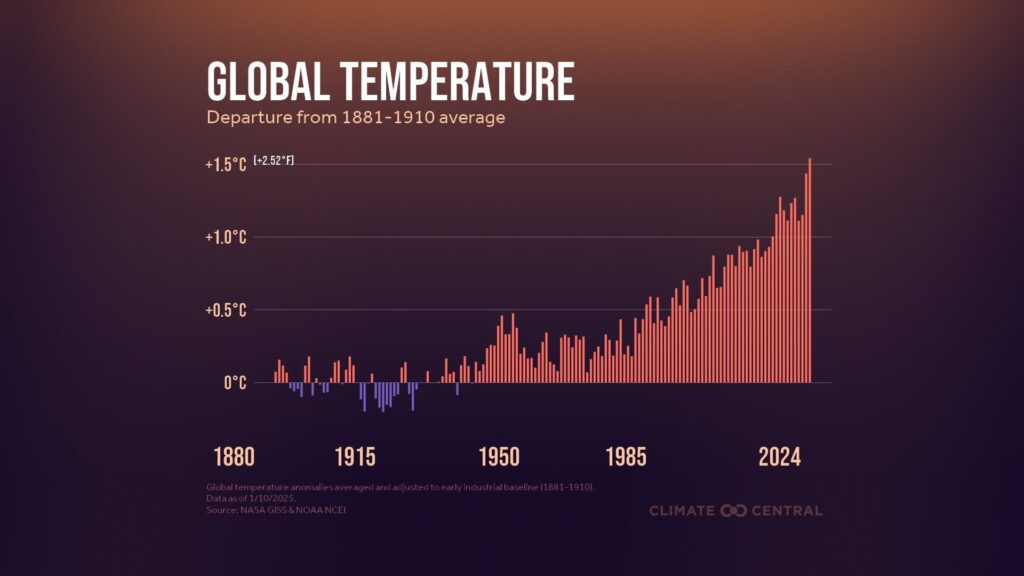
The findings confirm that the period from 2015 to 2025 represents the eleven hottest years on record. Data also shows that 2025 ranked as either the second or third warmest year ever recorded, with global temperatures approximately 1.43°C above the 1850–1900 average.
Extreme weather events, including intense heatwaves, heavy rainfall, and tropical cyclones, caused widespread disruption and damage worldwide. The report highlights how such events are exposing the vulnerability of interconnected global economies and societies.
Oceans Absorb Majority of Heat Driving Climate Imbalance
Oceans continue to play a central role in absorbing heat and carbon dioxide. Over the past two decades, the ocean has absorbed energy equivalent to roughly eighteen times the annual human energy consumption each year. Ocean heat content reached a new record high in 2025, with the rate of warming more than doubling between the periods 1960–2005 and 2005–2025.
Sea ice levels have also shown significant decline. Arctic sea ice extent remained at or near record lows, while Antarctic sea ice recorded its third-lowest extent. Glacier melt has continued without interruption, contributing to rising sea levels.
António Guterres described the situation as critical, stating that the global climate is now in a state of emergency. He noted that the repeated occurrence of record-breaking temperatures signals an urgent need for action.
UN Chief Declares Global Climate State of Emergency
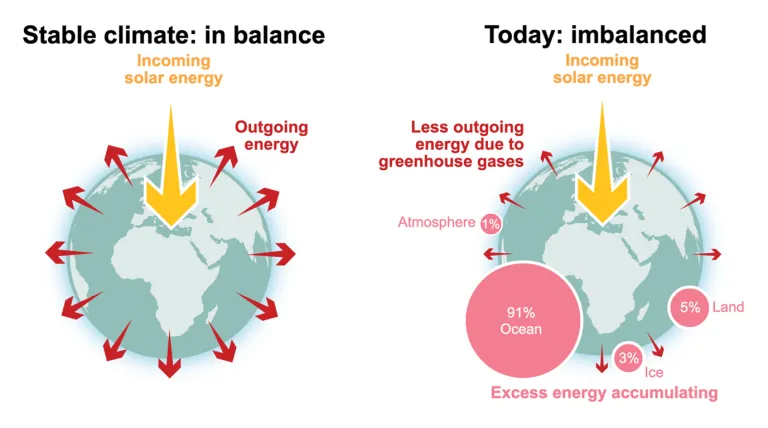
For the first time, the report includes Earth’s energy imbalance as a key climate indicator. This measure tracks the difference between incoming solar energy and outgoing heat from the Earth system. Under stable conditions, these levels are balanced, but increasing concentrations of greenhouse gases—including carbon dioxide, methane, and nitrous oxide—have disrupted this equilibrium. These gases are now at their highest levels in at least 800,000 years.
The report indicates that Earth’s energy imbalance has been increasing since measurements began in 1960, with a marked acceleration over the past 20 years. It reached its highest recorded level in 2025.
Read Also ;https://diplomatsworld.com/cyclone-ditwah-shows-growing-climate-disaster/
Celeste Saulo stated that scientific advances have improved understanding of the imbalance and its implications. She emphasized that human activity is increasingly disrupting natural systems, with long-term consequences.
The report further notes that more than 91% of excess heat is stored in the oceans, while only about 1% warms the atmosphere near the Earth’s surface and around 5% is absorbed by land masses. This makes the ocean a critical buffer against more extreme temperature increases on land.
Extreme Weather Events Intensify Displacement and Food Insecurity
Rising ocean temperatures and melting ice are driving long-term increases in global sea levels. According to projections from the Intergovernmental Panel on Climate Change, these changes will continue for centuries. Some impacts, including deep ocean warming and acidification, are considered irreversible over long time scales.
A supplementary section of the report, based on contributions from organizations including the UNHCR, World Food Programme, and Food and Agriculture Organization, highlights the broader impacts of extreme weather.
It states that climate-related events are increasingly affecting agricultural production and food security, while also driving displacement. Vulnerable and conflict-affected regions are particularly impacted, with repeated disasters limiting the ability of communities to recover and adapt.
The report concludes that the cascading effects of extreme weather, including impacts on migration, social stability, and food systems, are becoming more pronounced as climate pressures intensify.