$4.6M Japanese Grant Targets Customs Infrastructure in Yemen
RIYADH: Japan and the United Nations Office for Project Services (UNOPS) have formalized a new grant agreement aimed at enhancing customs operations at major ports across Yemen.
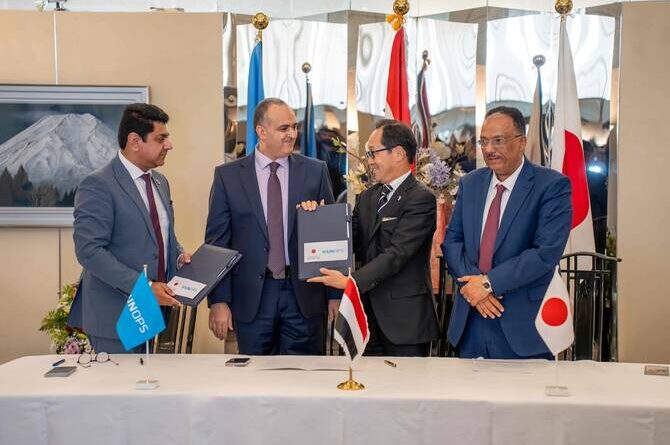
The agreement was signed and exchanged Thursday in Riyadh by Yoichi Nakashima, Japan’s ambassador to Yemen, and Muhammad Usman Akram, representative and director of the UNOPS Operational Hub in Amman. The grant totals 732 million yen (approximately $4.6 million).
The initiative, titled “The Project for the Improvement of Customs Functions at Major Ports,” is designed to address growing operational challenges faced by Yemen’s customs authorities after years of conflict.
Officials said significant damage to cargo inspection infrastructure — particularly X-ray screening systems — has sharply reduced inspection capacity. Currently, only about 20 percent of cargo entering affected ports can be scanned, with the remainder subjected to manual inspection.
This imbalance has led to extended clearance times and heightened risks, including the potential smuggling of weapons, narcotics, and other prohibited goods, according to remarks delivered during the signing ceremony.
The project will target three primary entry points: Aden Sea Port in Aden Governorate, Al-Shihn Land Port in Al-Mahra, and Al-Wadiah Land Port in Hadramout.
Under the agreement, Japan will finance the rehabilitation of X-ray inspection systems and provide modern detection equipment. The initiative also includes capacity-building measures, including specialized training for Yemeni customs officials.
Speaking at the ceremony, Nakashima said the 18-month project aims to strengthen the operational capacity of the Yemeni Customs Authority. Enhancing inspection efficiency, he noted, would help accelerate procedures while reducing reliance on manual checks.
He added that reinforcing customs systems would facilitate smoother trade flows and improve the handling of humanitarian shipments, which remain critical amid Yemen’s ongoing humanitarian crisis.
UNOPS representative Akram described the agreement as an important step in supporting Yemen’s customs authorities through Japanese funding.
“Today marks a significant step forward in strengthening the Yemeni Customs Authority through vital and much appreciated funding from our longstanding partner, the Government of Japan,” he said.
Akram said the project seeks to address key operational challenges and improve efficiency by reinforcing institutional capacity in cargo inspection and clearance procedures.
He added that the initiative is expected to lower the time and costs associated with importing goods into Yemen, including humanitarian assistance.
To meet these objectives, UNOPS will leverage its procurement expertise to acquire cargo inspection devices and essential spare parts needed to restore vehicle and container scanners, along with other necessary equipment.
The program will also include training and capacity-building components to ensure effective use of the upgraded systems.
Akram noted Yemen’s historic role as a major trading crossroads linking the Red Sea and the Gulf of Aden, describing the project as a step toward revitalizing and modernizing the country’s customs infrastructure.
He said the improvements are expected to facilitate trade, strengthen revenue collection, and support the Yemeni government’s broader reconstruction and development priorities.
Akram also expressed appreciation to the Government of Japan for its continued partnership and to Yemeni authorities for their cooperation in facilitating operational and logistical processes related to UNOPS projects.
“UNOPS remains committed to supporting the efforts of the Government of Yemen towards reconstruction and sustainable development with the valuable support of the international community,” he said.
Yemen’s Deputy Finance Minister Hani Wahab welcomed the agreement, calling it a major step toward upgrading customs infrastructure and improving operational efficiency.
He said the initiative would modernize automated inspection systems, supply spare parts for equipment, and support personnel training. Enhanced customs capacity, he added, would help facilitate trade, strengthen revenue collection, and combat the trafficking of illegal goods.
Nakashima also underscored Japan’s broader development engagement in Yemen, noting that Japan has provided technical assistance in customs management through training programs implemented by JICA in recent years.
With the latest grant, total Japanese assistance to Yemen since 2015 has reached approximately $497 million. Japan said it will continue collaborating with UN agencies and international partners to support peace and institutional resilience in Yemen.
Japan #Yemen #UNOPS #CustomsReform #PortSecurity #HumanitarianAid #MiddleEast #Reconstruction #InternationalCooperation #TradeFacilitation #diplomatsworld