Islamabad Emerges as Global Focal Point for US-Iran Peace Talks
Islamabad Serves as Strategic Mediator for Regional Conflict Resolution
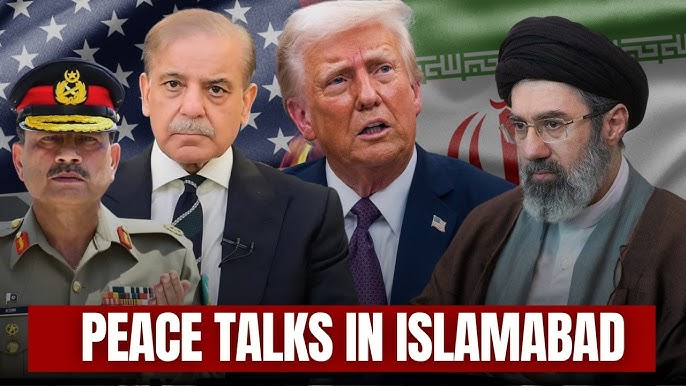
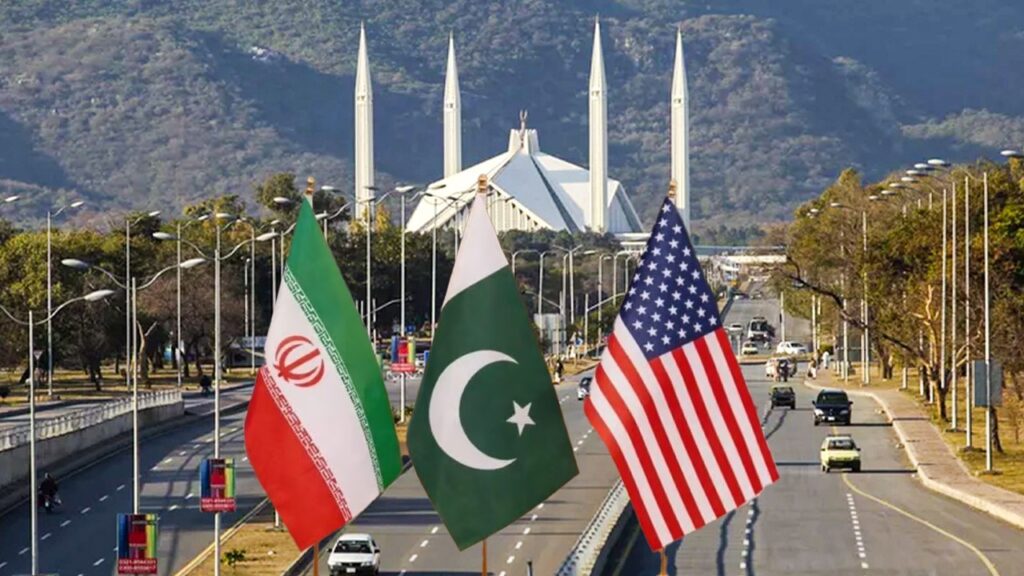
Following a period of intense military escalation and a subsequent ceasefire, Pakistan’s capital, Islamabad, has become the center of international diplomatic efforts. The historic negotiations between the United States and Iran are scheduled to begin today, marking a pivotal shift in Middle Eastern geopolitics. According to official sources, the initial phase involves delegation-level discussions, while the primary high-stakes session is slated for Saturday. This diplomatic breakthrough follows a ceasefire mediated by Pakistan, which led Prime Minister Shehbaz Sharif to issue formal invitations to both Washington and Tehran to resolve the conflict through structured dialogue.
High Level Representation From Washington and Tehran Delegations
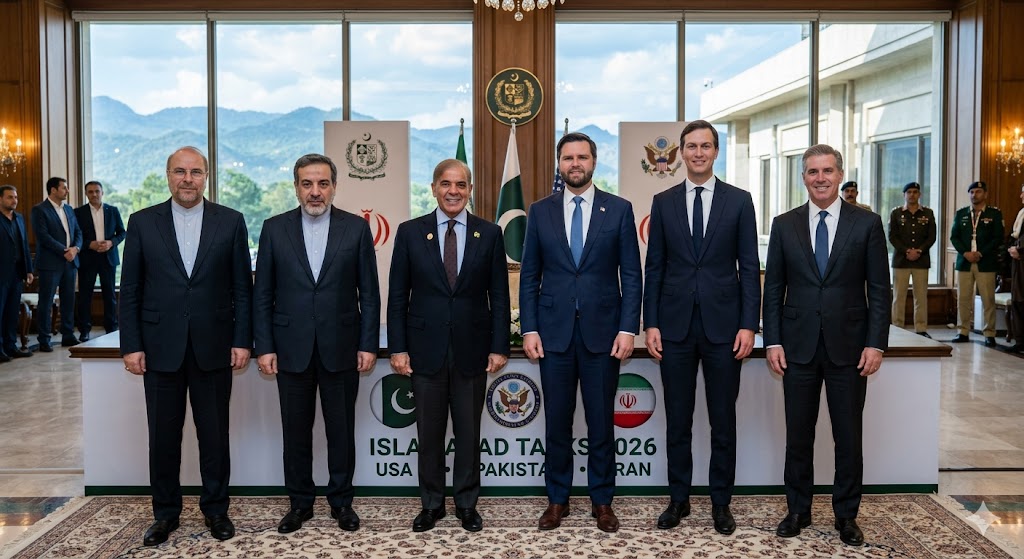
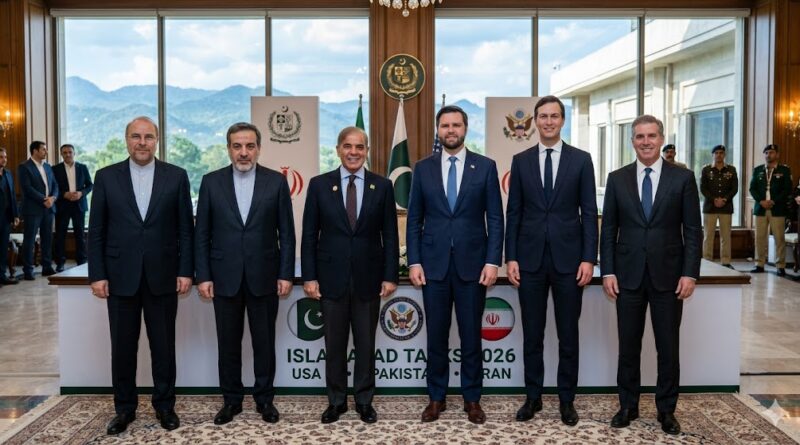
The gravity of these negotiations is underscored by the high-profile nature of the participants. The United States delegation is led by Vice President JD Vance, accompanied by Special Envoy Steve Witkoff and Jared Kushner. Federal Interior Minister Mohsin Naqvi confirmed during a meeting with U.S. Chargé d’Affaires Natalie Baker that these officials are being treated as state guests with full diplomatic protocol. Representing the Islamic Republic of Iran are Speaker of the Parliament Mohammad Baqer Qalibaf and Foreign Minister Abbas Araghchi. The White House has indicated that discussions will occur behind closed doors to address sensitive security and economic interests essential to a long-term agreement.
Historical Context of Hostilities and Global Economic Repercussions
This diplomatic summit occurs in the wake of a devastating conflict that began six weeks ago with joint U.S.-Israeli strikes on Iranian territory. These military actions resulted in the martyrdom of Supreme Leader Ayatollah Ali Khamenei, triggering a wider regional war that claimed thousands of lives. The ensuing hostilities significantly disrupted the Strait of Hormuz, a corridor responsible for approximately 20 percent of the world’s oil and gas transit. This disruption led to record-high energy prices and global market instability. The Islamabad talks aim to transition the current 14-day temporary ceasefire into a permanent peace framework to prevent further economic and humanitarian fallout.
Timeline and Scope of the Multi Day Diplomatic Process
While the White House initially projected a weekend timeline for the talks, the Iranian Supreme National Security Council has suggested the process could extend for up to 15 days. This potential duration indicates a willingness to address complex underlying issues, including the escalation of Israeli strikes in Lebanon and differing interpretations of the ceasefire terms. Despite these challenges, public sentiment in the host nation remains overwhelmingly positive, with a recent Gallup survey indicating that 93 percent of Pakistanis support the government’s efforts to facilitate this peace process. The extended stay of certain delegates suggests a commitment to achieving a comprehensive resolution.
read also ; Iran Reopens Strait of Hormuz With Strict New Limits
Unprecedented Security Deployment in the Federal Capital
To ensure the safety of the international delegations, the Pakistani government has instituted extraordinary security measures across Islamabad. Prime Minister Shehbaz Sharif personally visited the negotiation venues to oversee the arrangements and review the deployment of personnel. The city’s Red Zone has been completely cordoned off, and a public holiday was declared for April 9 and 10 in the twin cities of Islamabad and Rawalpindi. These administrative actions are intended to facilitate the secure movement of foreign dignitaries. Security duties are being managed by a joint force comprising the Pakistan Army, Rangers, and federal police contingents stationed at all key entry points.
Economic Stability and the Restoration of Global Energy Corridors
A primary objective of these negotiations is the full restoration of maritime supply chains through the Strait of Hormuz. Restoring stability to this transit point is viewed as essential for normalizing global energy prices and ensuring international economic security. As the first major face-to-face diplomatic engagement between Washington and Tehran since the death of Iran’s Supreme Leader, the Islamabad summit represents a critical opportunity for regional stabilization. The inclusion of figures such as Jared Kushner and Steve Witkoff suggests a focus on sustainable economic and political architecture, with all eyes on Pakistan’s mediation to see if a final treaty can be successfully brokered.