Palestinian Global Population Surpasses Fifteen Million Amid Regional Conflict
Global Palestinian Population Reaches Fifteen Million Milestone
The Palestinian Central Bureau of Statistics (PCBS) released a comprehensive report on Tuesday, revealing that the global Palestinian population has reached approximately 15.5 million. This statistical update, issued to mark the 78th anniversary of the Nakba, indicates that 7.4 million Palestinians currently reside within historic Palestine. Meanwhile, an estimated 8.1 million individuals comprise the Palestinian diaspora, living in various nations across the globe. These figures underscore the demographic resilience of the population despite decades of geopolitical shifts, territorial disputes, and the ongoing challenges associated with statelessness and regional instability in the Middle East.
Millions Displaced Internally Due to Sustained Military Conflict
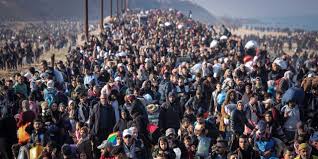
The PCBS report highlights a dire humanitarian situation, noting that more than two million Palestinians are currently displaced within the Gaza Strip and the occupied West Bank. In Gaza alone, the statistics bureau indicates that nearly two million people—out of a pre-war population of 2.2 million—have been forced from their homes. This massive internal migration has resulted in a significant portion of the population living in temporary tents, overcrowded shelters, and repurposed school buildings. The displacement is described as a direct consequence of the intensive military offensive that has characterized the region over the past two years.
Escalation of Illegal Settlement Activity in the West Bank
According to official figures, illegal Israeli settlement activity saw a marked expansion by the end of 2025, with the total number of settlements and military bases reaching 645. This infrastructure includes 151 established illegal settlements and 350 smaller outposts. The bureau reported that the number of Israeli occupiers in the West Bank reached approximately 778,567 by the end of 2024, with nearly 43% concentrated in occupied East Jerusalem. This expansion is accompanied by the seizure of over 5,500 dunams of Palestinian land in 2025 through various administrative orders and declarations of “state land.”
Humanitarian Toll and Casualty Figures in the Gaza Strip
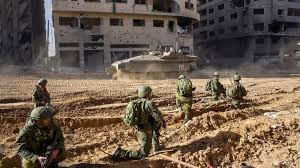
The statistical review provides a grim account of the human cost of the offensive in Gaza since October 2023. The PCBS documented that the Israeli army has killed more than 72,000 Palestinians, a figure that primarily includes women and children. Additionally, over 172,000 individuals have sustained injuries during the two-year military campaign. Beyond the loss of life, the bureau highlighted the immense psychological and social toll on the survivors, many of whom have lost multiple family members and have no access to stable healthcare or educational facilities due to the systematic destruction of civil infrastructure.
read also ; EU Ministers Approve Sanctions Against Israeli Settlers and Hamas
Widespread Destruction of Housing and Essential Civil Infrastructure
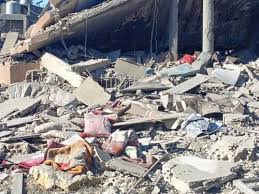
In terms of physical infrastructure, the scale of damage in Gaza is unprecedented. The bureau reported that more than 102,000 buildings have been completely destroyed, while an additional 330,000 housing units have suffered full or partial damage. This destruction extends to vital health facilities, schools, and utility networks, leaving the enclave’s remaining residents without basic services. The systematic leveling of residential neighborhoods has created a long-term housing crisis that will likely require decades of reconstruction efforts and billions of dollars in international aid to resolve, provided a stable political environment is established.
Environmental Impact and Destruction of Agricultural Resources
The West Bank has faced significant environmental and economic damage due to the uprooting of agricultural assets. Between 2022 and 2025, the bureau documented more than 61,000 attacks by security forces and occupiers, resulting in the destruction of over 81,000 trees, the majority of which were olive trees. These trees represent a vital economic lifeline and cultural symbol for Palestinian farmers. The loss of these resources, combined with the bulldozing of agricultural land, has severely undermined the local economy and traditional livelihoods, further exacerbating the food insecurity and economic dependence of the affected communities.
Movement Restrictions and Checkpoints Hindering Daily Life
Daily life in the West Bank continues to be heavily impacted by a network of approximately 900 military checkpoints and gates. The PCBS report explains that these restrictions severely limit the movement of residents and block access to vast areas of agricultural and grazing land. These barriers not only hinder personal travel but also impede the transport of goods and the delivery of essential services. The cumulative effect of these checkpoints is a fragmented territory where economic development is stifled and social cohesion is challenged by the physical separation of towns and villages from their natural resources.