Australia Grants Exemption Amid Alcoa Environmental Controversy
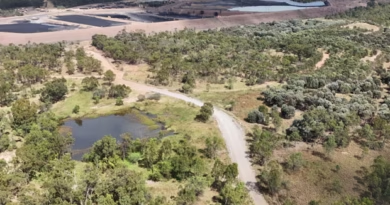
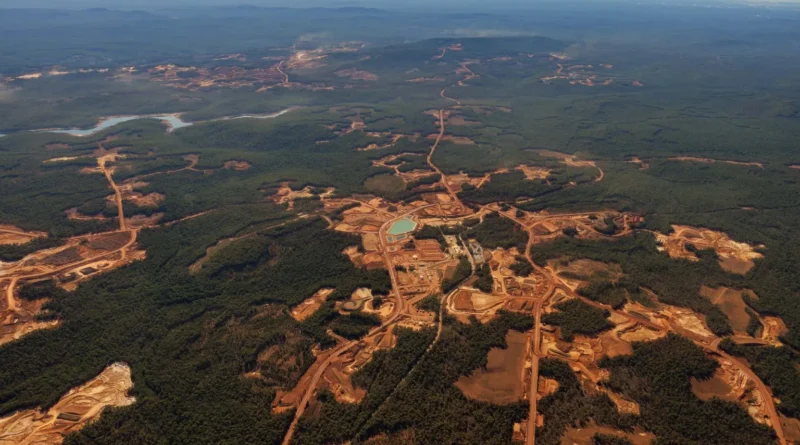
CANBERRA: The Australian government’s decision to allow US mining giant Alcoa to continue clearing large areas of Western Australia’s jarrah forest has sparked outrage, with critics citing environmental damage and past illegal clearing practices.
A newly released document shows that the decision was influenced in part by a critical minerals agreement reached last year between Australia and the Trump administration. The deal involved the sale of gallium for defense and renewable energy purposes.
Alcoa has been unlawfully clearing land south of Perth for its bauxite mining operations for 15 years, despite repeated warnings from the federal environment department. However, the “unprecedented” $55 million penalty announced by Environment Minister Murray Watt only applies to clearing that occurred between 2019 and 2025 in known habitat for nationally protected species, under the Environment Protection and Biodiversity Conservation Act.
When announcing the penalty, Watt said he granted Alcoa a national interest exemption to allow continued clearing in the northern jarrah forest for 18 months while the government considered a proposal to extend Alcoa’s Huntly and Willowdale mining operations to 2045.
The newly released document reveals that since 2011, the environment department had informed Alcoa that its operations required approval under Australia’s environmental laws. A department spokesperson explained that clearing prior to 2019 falls outside the statute of limitations, preventing enforcement action against earlier violations.
The exemption, according to Watt, was justified because of Alcoa’s involvement in the critical minerals deal, which also includes Japanese partners, the Sojitz Corporation, for the development of a gallium plant at Alcoa’s Wagerup refinery. Both the Australian and US governments committed funding and equity to the project. Watt stated that the exemption aimed to “reinforce and give confidence” to international partners regarding Australia’s commitment to the critical minerals framework.
Conservationists have sharply criticized the decision. Matt Roberts, executive director of the Conservation Council of Western Australia, called the ongoing illegal clearing “an affront to every West Australian” and accused the government of prioritizing corporate and foreign defense interests over environmental protection, endangered species, and Perth’s drinking water.
National interest exemptions have historically been reserved for emergencies, such as firefighting during recent Victorian bushfires and the emergency management of endangered species affected by marine heatwaves in Tasmania. Critics argue that using this power for corporate projects sets a concerning precedent.
The controversy highlights tensions between economic, strategic, and environmental priorities, raising questions about accountability and the enforcement of environmental regulations in Australia.