President Zardari Warns India, Urges Shift to Dialogue
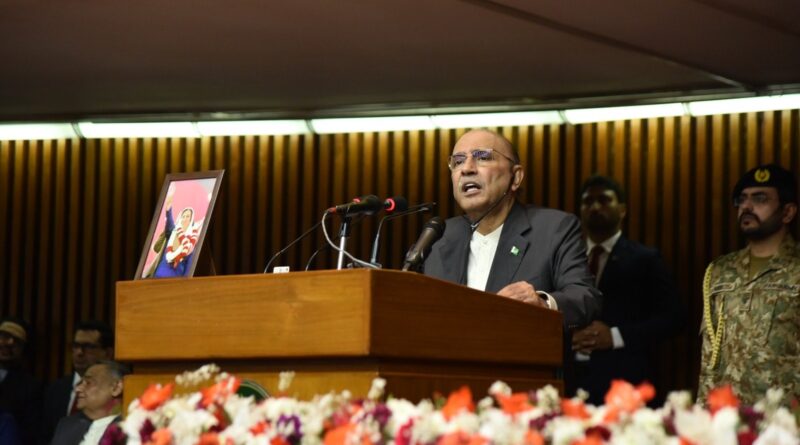
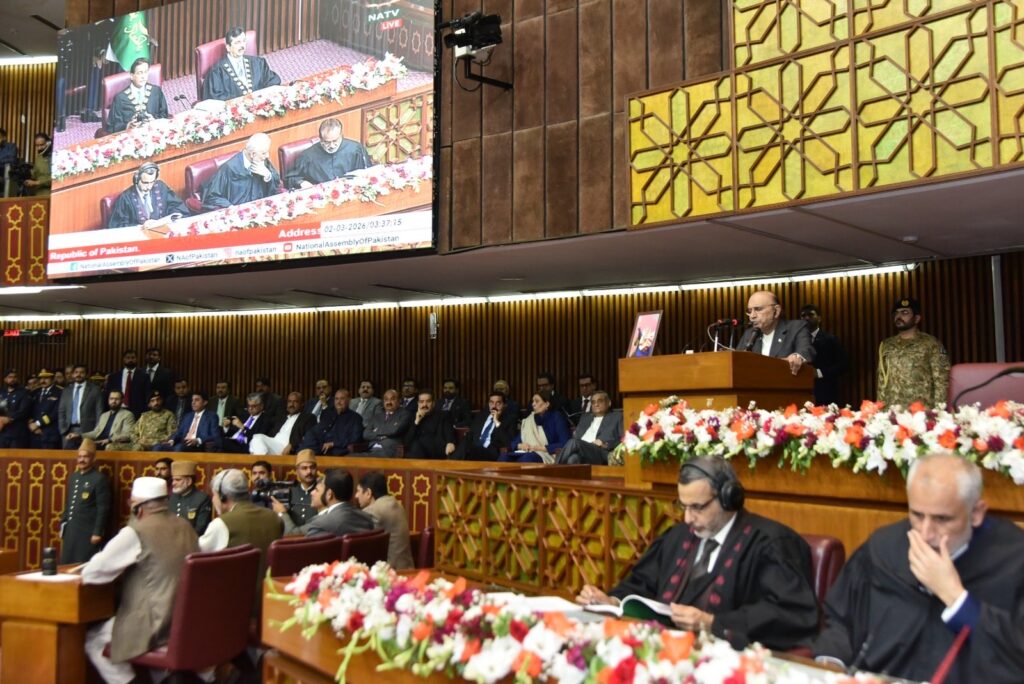
ISLAMABAD: President Asif Ali Zardari on Monday described war as a last resort, urging India to move from “war theatres to meaningful negotiating tables” or face another humiliating defeat, while reaffirming Pakistan’s diplomatic and moral support for the people of Jammu and Kashmir.
Pakistan Ready to Defend Sovereignty, Says Zardari
Addressing a joint sitting of parliament at the start of the new parliamentary year, the president said Pakistan was prepared to defend itself decisively if required. “Make no mistake. We are ready for you,” he said, adding that regional security could only be ensured through dialogue and negotiations.
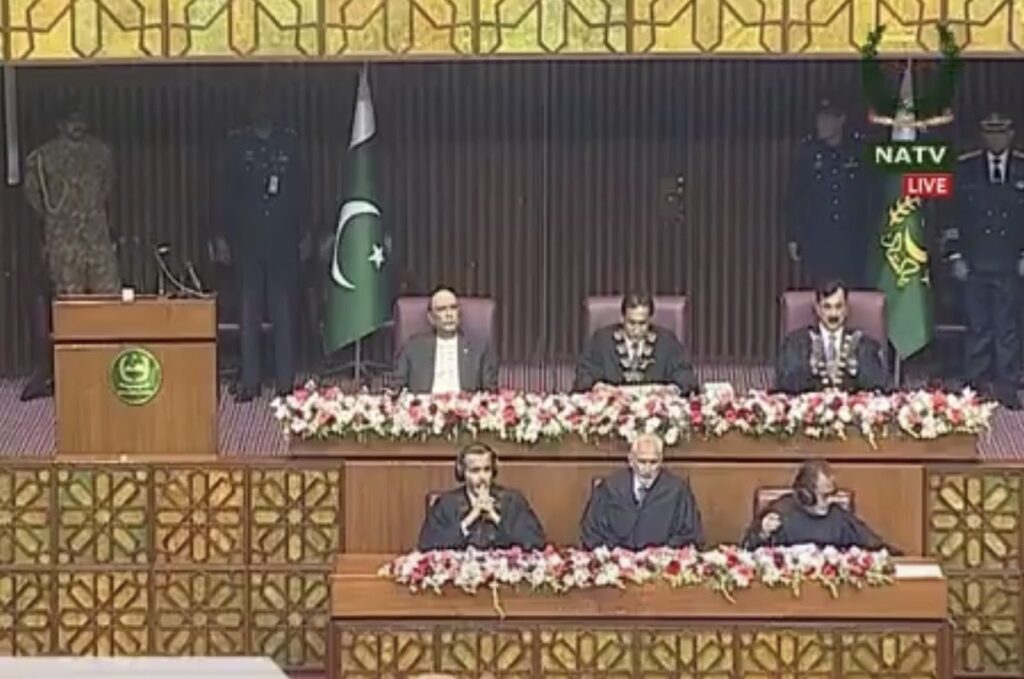
The session, co-chaired by Senate Chairman Syed Yousuf Raza Gilani and National Assembly Speaker Sardar Ayaz Sadiq, was attended by Prime Minister Shehbaz Sharif, members of both houses of parliament, provincial leaders and diplomats.
Negotiated Solutions Sought for Gulf Crisis
The president said no one in South Asia would be free or safe until Kashmiris achieved freedom from what he termed Indian occupation. Responding to statements by Indian leaders about preparing for another war, he reiterated that Pakistan was a responsible nuclear state but would defend itself when necessary.
On regional tensions, the president condemned the war waged on Iran and expressed support for its sovereignty and territorial integrity. He also condemned subsequent attacks on the United Arab Emirates, Bahrain, Jordan, Kuwait, Qatar and Saudi Arabia, calling for restraint and negotiated solutions to prevent a deepening crisis in the Gulf.
President Calls War Last Resort in Parliament Address
“The sooner stability returns to the region, the sooner the world can go back to rebuilding lives and fractured trust,” he said, urging adherence to international law and respect for territorial integrity.
Referring to Maarka-e-Haq and Operation Ghazab Lil Haq, President Zardari said Pakistan initially exercised restraint but later responded with what he described as professionalism and discipline. He said the armed forces acted decisively in response to attacks attributed to the Afghan Taliban regime, adding that Pakistan had shown only a fraction of its capabilities.
Read Also ; Dar Stresses De-Escalation in Diplomatic Meetings
He alleged that the Afghan Taliban regime continued to provide sanctuaries to militant groups, including Al-Qaeda, BLA and TTP, in violation of commitments made in Doha. He urged Afghan authorities to dismantle such groups and choose peace over conflict.
On international relations, the president appreciated efforts by friendly countries to help de-escalate tensions between Pakistan and India. He said ties with the United States had expanded into new avenues of cooperation, while the “ironclad” relationship with China had reached new heights, particularly under CPEC 2.0. He thanked President Xi Jinping for China’s solidarity.
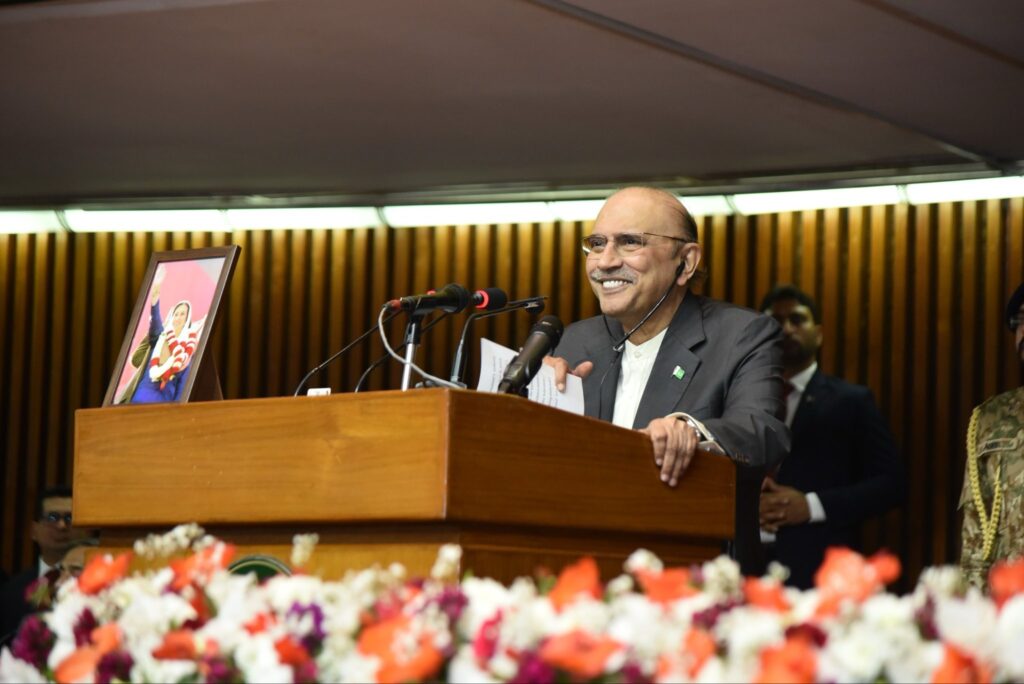
He also highlighted strengthened ties with Gulf countries, Azerbaijan and Turkiye, noting that the Pakistan-Saudi Strategic Mutual Defence Agreement marked a milestone.
Addressing domestic matters, President Zardari criticized India’s unilateral actions placing the Indus Waters Treaty in abeyance, terming it “hydro-terrorism,” and vowed to defend Pakistan’s water rights under international law.
He called for strengthening provincial autonomy, effective functioning of constitutional forums, and a just National Finance Commission Award. Emphasizing inclusive economic growth, he urged reforms in taxation, energy, agriculture and climate resilience, alongside expansion of the Benazir Income Support Program.
Concluding his address, the president urged unity to safeguard sovereignty, eliminate terrorism and translate macroeconomic gains into tangible relief for citizens.