
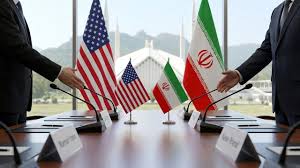
Walking the Tightrope: Pakistan’s High-Stakes Mediation Between the US and Iran
By Muhammad Sajjad Haider
In the tumultuous Middle East scene, a surprise figure has emerged as the focal point of one of our time’s most significant geopolitical conflicts. Following the commencement of the US-Israel war on Iran in 2026, Pakistan has stepped in as a crucial mediator, rather than a belligerent. Pakistan pulled off an unexpected diplomatic triumph by hosting the extraordinary Islamabad Talks in April 2026 and brokering a tenuous ceasefire. However, this new role is riddled with enormous complexity, requiring a delicate balancing act with serious diplomatic and financial consequences for the South Asian nation.
A formidable combination of strategic necessity and diplomatic agility pushed Pakistan’s unexpected rise to the position of peacemaker. With a 900-kilometre border with Iran and a deep, historically entrenched strategic cooperation with Saudi Arabia, Islamabad finds itself caught in the crossfire of regional rivalry. The battle has already interrupted maritime traffic in the Strait of Hormuz, highlighting Pakistan’s severe economic vulnerabilities. However, inside this crisis, Pakistan’s military and civilian leadership recognised an opportunity to restore international importance and gain practical rewards.
The Diplomatic Ledger: Gains and Risks
On the diplomatic front, Pakistan’s mediation efforts have produced immediate results. The ability to draw senior delegations from Washington and Tehran to the negotiating table in Islamabad has enhanced Pakistan’s standing as a credible middle power. This is in sharp contrast to its earlier reputation, which was sometimes tainted by allegations of harbouring extremists or playing a double game. Pakistan has shown a unique diplomatic value by retaining open lines with Iran, with whom it has complex but functional ties, and utilising its close relationship with the Trump administration.
President Donald Trump’s personal friendship with Pakistan’s army head, Field Marshal Asim Munir, has played a vital role. The US administration’s dependence on Islamabad to convey messages and de-escalate tensions reflects a shift in Washington’s strategy, which favours burden-sharing with regional countries. This reinvigorated US-Pakistan interaction has the potential to spark broader strategic cooperation, such as counterterrorism activities and regional stability measures.
read also ; Kaja Kallas Calls for Joint Procurement and Enhanced Innovation
However, diplomatic hazards are equally significant. Pakistan’s mediation is founded on a neutral attitude, which is becoming increasingly difficult to maintain. The country’s 2025 Strategic Mutual Defence Agreement with Saudi Arabia puts Pakistan in a difficult position; any escalation involving Riyadh could force Islamabad to take sides, upsetting Tehran and jeopardising its mediation efforts. Furthermore, if the peace talks fail, Pakistan risks being viewed as an incompetent broker, undermining its hard-earned credibility on the international scene.
Domestically, the government is facing a severe reaction. Pakistan has the world’s second-largest Shia population, and the public ardently supports Iran. Protests following the assassination of Iran’s Supreme Leader Ayatollah Ali Khamenei turned violent, highlighting the conflict’s potential to incite sectarian tensions in Pakistan. The government’s careful manoeuvring is continuously tested by a citizenry that distrusts any apparent alliance with US or Israeli interests.
The Financial Equation: Stakes and Potential Windfalls
The economic consequences of the US-Iran war are probably the most pressing concern for Islamabad. Pakistan’s economy, which is already unstable and reliant on international bailouts, is particularly sensitive to oil shocks. The country imports roughly 90% of its crude oil from the Gulf, and the obstruction of shipping lanes resulted in a significant increase in domestic fuel prices—more than 40% in one month. This energy crisis caused the government to impose extreme austerity measures, such as a four-day work week and power rationing.
Furthermore, the conflict endangers the livelihoods of millions of Pakistani expatriates in the Middle East, whose remittances—worth around $30 billion per year—are critical to the national economy. A lengthy war could result in widespread repatriations, worsening unemployment and depleting the country’s foreign exchange reserves.
In contrast, a good peace accord could result in considerable financial rewards for Pakistan. The easing of US sanctions on Iran would give new life to the long-stalled Iran-Pakistan gas pipeline project. This program could provide a much-needed, lower-cost energy alternative, lowering Pakistan’s reliance on costly liquefied natural gas (LNG) imports and alleviating the country’s chronic energy shortages.
Furthermore, Pakistan is actively utilising its better relations with the United States to attract investment and broaden its global economic presence. A 16-member Pakistani corporate delegation will attend the 2026 SelectUSA Investment Summit in Maryland, which is a perfect illustration of this diplomatic dividend. Led by the US Consul General in Karachi, these enterprises investigated development potential in industries ranging from technology and textiles to food processing and manufacturing, indicating significant bilateral economic momentum. This follows other recent successes, including a $500 million agreement with a US business to explore rare minerals in Pakistan, which was managed by the Special Investment Facilitation Council (SIFC). Furthermore, a stabilised region would most likely lead to increased demand for Pakistani labour in the Gulf, boosting remittances flows.
Pakistan’s role as a geopolitical mediator between the United States and Iran is a risky act. Driven by the urgent need to defend its fragile economy and secure its borders, Islamabad has skilfully established itself as an important mediator. While the possible benefits—from energy security to increased international prestige—are significant, the risks of failure are catastrophic. As the world watches the negotiations, Pakistan’s success or failure will decide not only the future of the Middle East, but also its own path in an increasingly turbulent global order.