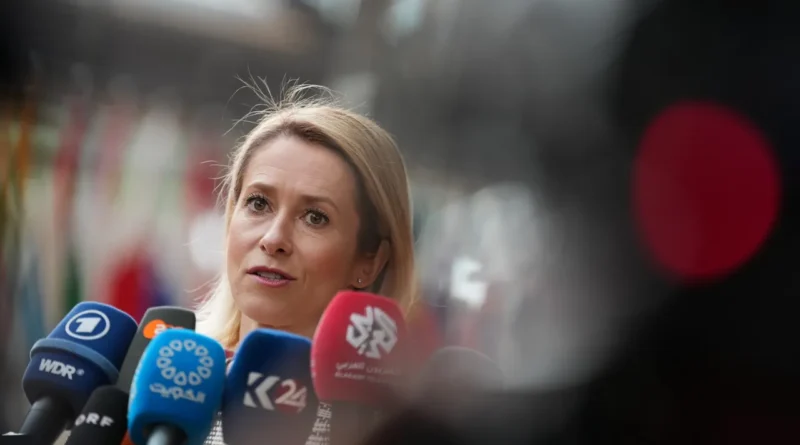
Kaja Kallas Calls for Joint Procurement and Enhanced Innovation
Kaja Kallas Urges Accelerated European Defense Industrial Production
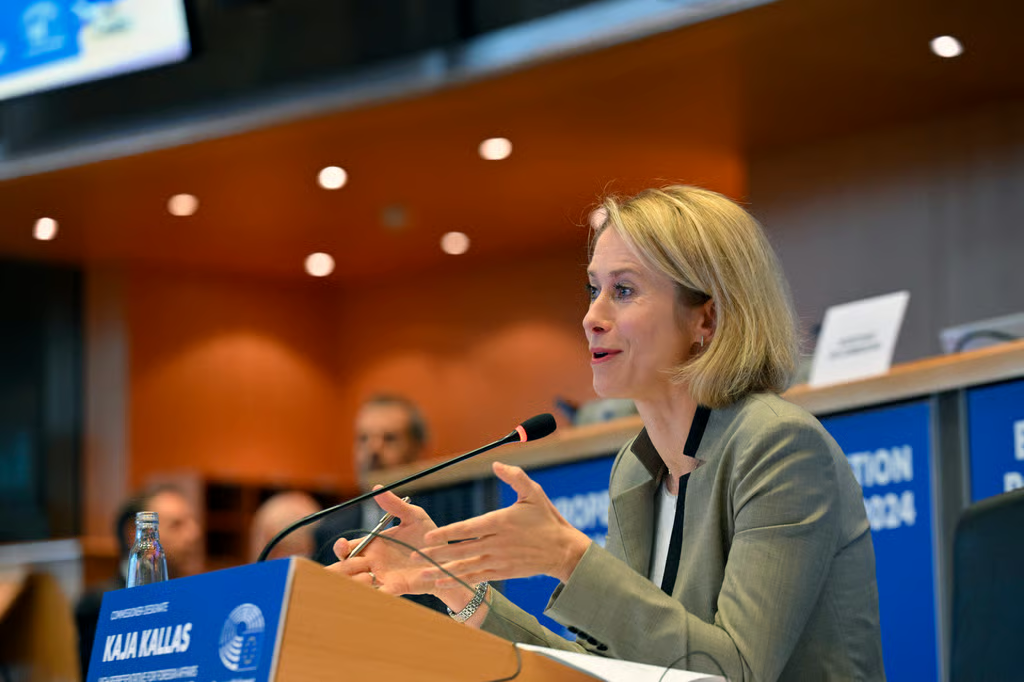
The European Union’s foreign policy chief, Kaja Kallas, issued a strong appeal on Tuesday for a rapid increase in the continent’s defense production capabilities. Speaking at a summit of EU defense ministers in Brussels, Kallas highlighted the critical need for member states to synchronize their military industries. She pointed out that while funding is currently available, the defense industry has struggled to ramp up production to the necessary levels. The meeting serves as a pivotal moment for the bloc to address long-standing inefficiencies and ensure that European security infrastructure is capable of meeting contemporary threats and maintaining its strategic autonomy.
Focus on Innovation and Interoperability Among Member States
A central theme of the Brussels discussions is the promotion of innovation and the execution of joint military projects. Kallas emphasized that the current landscape of European defense is fragmented, with too many individual member states pursuing projects that lack interoperability. By pushing for more joint procurement, the EU aims to create a more cohesive and efficient defense framework. Kallas noted that the lessons learned from the ongoing conflict in Ukraine are being integrated into these strategic shifts, emphasizing that collaborative efforts are essential to overcome the technical and logistical barriers currently hindering the bloc’s collective defense capacity.
Financial Support and Industrial Bottlenecks for Ukraine
The defense ministers are set to discuss a massive €90 billion ($97.8 billion) loan proposal designed to meet the urgent military and humanitarian needs of Kyiv. Ukraine’s defense minister is expected to participate in the talks to provide firsthand accounts of the requirements on the front lines. Beyond financial aid, the summit includes direct consultations with representatives from the defense industry to identify and resolve specific production bottlenecks. Kallas stated that the goal is to bridge the gap between available government funding and industrial delivery speeds, ensuring that critical supplies reach their destinations without unnecessary bureaucratic or manufacturing delays.
Security Strategy for Lebanon and UNIFIL Mission Transition
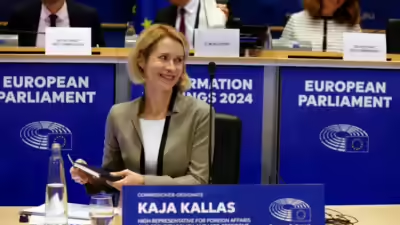
The summit also turned its attention toward the Middle East, specifically focusing on the security situation in Lebanon. Ministers are exploring the possibility of a new European mission to support the Lebanese armed forces following the scheduled conclusion of the UNIFIL mission later this year. Kallas reported significant interest among member states in establishing a successor mission to maintain regional stability. This proactive approach reflects the EU’s commitment to ensuring that a security vacuum does not emerge in Lebanon, which could have broader implications for Mediterranean and international security frameworks.
read also ; US and China Trade Officials Hold Video Summit
Adjustments to Aspides Naval Operation in Strait of Hormuz
Maritime security remains a high priority, with the ministers reviewing the EU’s Aspides naval operation currently active in the Strait of Hormuz. Kallas indicated that the operational plan for this mandate could be adjusted to better respond to evolving threats in the region, provided there is political consensus among the member states. While the physical and administrative structure for the mission is already functional, any expansion or shift in focus would require additional contributions and formal agreement from the bloc. This potential adjustment aims to safeguard critical global shipping lanes and enhance the EU’s role in international maritime protection.
Collaborative Framework to Overcome Manufacturing Hurdles
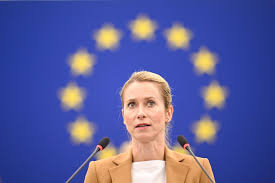
To address the disconnect between policy and production, EU officials are seeking to create a more integrated environment for defense manufacturers. Kallas underscored that the purpose of meeting with industry leaders is to diagnose the underlying issues preventing the scaling of production lines. By bringing together political leadership and industrial stakeholders, the EU hopes to streamline the supply chain and accelerate the delivery of advanced military technologies. This collaborative framework is viewed as essential for maintaining the long-term readiness of European forces and fulfilling the bloc’s commitments to international partners and regional allies.
Political Alignment and Strategic Autonomy in Defense
The ongoing discussions in Brussels represent a broader push for political alignment within the European Union regarding sovereign security. Kallas’s remarks reflect a growing consensus that the EU must evolve from a collection of individual military powers into a unified strategic actor. Achieving this requires not only increased spending but also a fundamental change in how member states procure and deploy military assets. The success of these initiatives depends on the willingness of national governments to prioritize collective European defense goals over local industrial interests, a shift that Kallas argues is vital for the continent’s future security architecture.