Prime Minister Orders Stronger Enforcement Against Tax Evasion
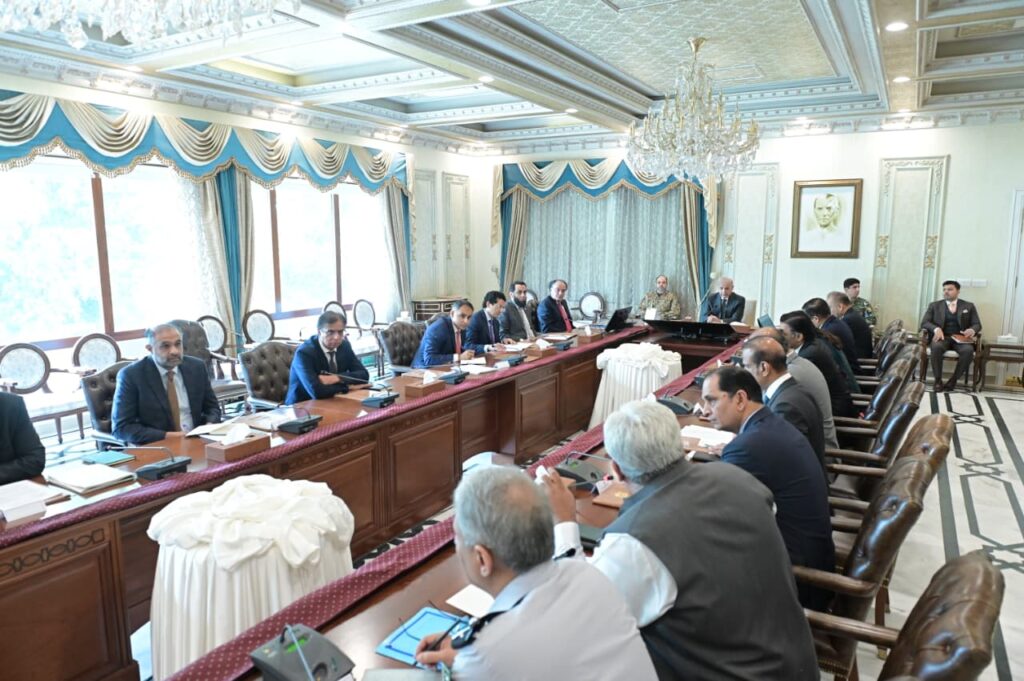
Prime Minister Shehbaz Sharif chaired a weekly review meeting in Islamabad to assess reforms and operational developments within the Federal Board of Revenue (FBR), with a strong focus on increasing tax collection and strengthening enforcement against tax evasion.
Prime Minister Shehbaz Sharif Reviews FBR Reforms And Revenue Measures
During the meeting, the prime minister directed authorities to expand automated monitoring systems across a broader range of productive sectors in order to improve transparency and boost tax revenues. He emphasized that the FBR must further strengthen enforcement mechanisms to curb tax evasion and ensure effective revenue collection.

Officials briefed the meeting on ongoing reforms aimed at modernizing tax administration through technology-based monitoring systems. According to the briefing, multiple digital and automated mechanisms have already been implemented to monitor production activities across different industries, while additional systems are expected to become operational soon.
These monitoring mechanisms include the use of video analytics, unit counting technologies, barcode scanning, stamping systems, serialization processes, and other digital tools designed to ensure accurate tracking of industrial output.
Pakistan Accelerates Digital Invoicing And Automated Tax Systems
The briefing noted that production monitoring is currently being conducted in all sugar, cement, cigarette, and fertilizer manufacturing plants across the country. Authorities informed the prime minister that the introduction of these monitoring systems has already contributed to an increase in tax revenue.

Officials also highlighted that similar monitoring measures are being expanded to other sectors including textiles, leather, paper, automobiles, beverages, and additional industries. The government expects these initiatives to generate billions of rupees in additional tax revenue once fully implemented.
Prime Minister Shehbaz Sharif also appreciated the economic team for strengthening the executive leadership of Pakistan Revenue Automation Limited (PRAL) through merit-based recruitment of professionals. He emphasized the importance of transforming PRAL into an efficient and fully functional institution capable of supporting modern tax administration systems.
Technology-Based Monitoring Expands Across Major Industrial Production Sectors
The meeting was informed that the newly appointed executive team at PRAL has become fully operational and is actively working to enhance digital systems supporting tax administration.

Officials further reported that PRAL’s digital invoicing system has already become fully functional. According to the briefing, digital invoices worth approximately 800 billion rupees were processed during the months of January and February. Authorities expressed confidence that the system would achieve its target of processing digital invoices worth three trillion rupees by April 2026.
The meeting was also informed that the FBR’s new data center, designed in line with modern technological standards, has been fully completed and is ready for operational use.
Government Targets Higher Revenue Through Tax Dispute Resolution Reforms
In addition to tax monitoring reforms, officials briefed the prime minister on new measures aimed at preventing smuggling and improving cargo tracking across the country. Authorities stated that a digital cargo tracking system has been introduced, including the implementation of the e-Bilty system to monitor the transportation of goods more effectively.

The meeting was also informed that an integrated GPS tracking system has been implemented to monitor the movement of petroleum products.
Prime Minister Shehbaz Sharif directed authorities to develop automated tax systems, digital invoicing platforms, the IRIS system, and other tax-related applications in Urdu and other local languages to make them more accessible for taxpayers.
Read Also ; Iranian Solid-Fuel Missile Engine Facility Destroyed In Shahrud
Officials also highlighted legal reforms introduced to strengthen the Alternative Dispute Resolution Committees aimed at improving transparency and restoring taxpayer confidence in the tax system.
According to the briefing, these committees are expected to generate approximately 80 billion rupees in tax revenue by June 30, 2026. Authorities further reported that court decisions in tax cases between July 2025 and January 2026 resulted in the recovery of 102.9 billion rupees for the national exchequer.

Officials expressed confidence that an additional 369 billion rupees could be recovered from pending tax cases by June 2026.
The meeting was attended by federal ministers Muhammad Aurangzeb, Ahsan Iqbal Khan Cheema, Dr. Musadik Masood Malik, Attaullah Tarar, Shaza Fatima Khawaja, Ali Pervaiz Malik, Minister of State for Finance Bilal Azhar Kayani, the Attorney General of Pakistan, the Chairman of the Federal Board of Revenue, and senior officials from relevant institutions.