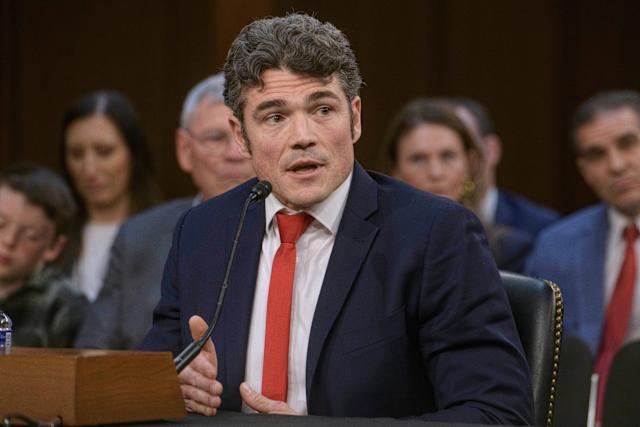

Joe Kent Issues Public Appeal Against Iranian Land Invasion
Former Counterterrorism Chief Urges Americans To Oppose Ground War
In a significant intervention regarding U.S. foreign policy, Joe Kent, the recently resigned Director of the American Counterterrorism Center, has issued an urgent appeal to the American public to prevent a ground military operation in Iran. In a formal statement, Kent emphasized the necessity of citizen activism, urging Americans to contact the White House and their respective congressional representatives to voice opposition to any deployment of land forces. To facilitate this movement, Kent publicly released the official contact numbers for the White House and the United States Congress, characterizing the current moment as a critical juncture for national military strategy.

According to Kent, regional leaders are looking toward Washington to de-escalate the burgeoning crisis. He cited Egyptian President Abdel Fattah el-Sisi, who reportedly stated that President Donald Trump is the only global figure capable of halting the ongoing conflict within the Gulf region. This diplomatic pressure coincides with Kent’s domestic warning that a transition from aerial and naval engagements to a full-scale ground invasion would represent a catastrophic escalation. The former director’s resignation and subsequent public stance reflect deepening internal debates within the U.S. security apparatus regarding the long-term objectives of the current military campaign against Tehran.
Regional Defense Systems Intercept Thousands Of Iranian Aerial Strikes
Simultaneously, documented reports from Arab media outlets have shed light on the staggering scale of Iranian military activity across the Gulf over the past thirty days. According to these regional reports, Iran has launched more than 5,200 strikes against neighboring countries within a single month. The data suggests a multi-front aerial campaign utilizing ballistic missiles, sophisticated drones, and manned combat aircraft. This unprecedented volume of fire has forced regional defense networks into continuous operation, highlighting a period of extreme volatility that has disrupted regional security and international maritime stability.

Specific casualty and interception data indicate that Saudi Arabia’s defense systems have been particularly active, successfully neutralizing 57 missiles and 1,006 drones during this thirty-day window. The intensity of the attacks extended to Kuwait, which faced a barrage of 309 ballistic missiles and 616 drones. Qatar was also targeted, recording 206 missile strikes and 90 drone incursions, alongside the involvement of two Iranian combat aircraft. These figures represent a coordinated effort to overwhelm regional missile defense shields and signal a significant departure from previous patterns of localized or proxy-based skirmishes in the Middle East.
Arab Media Reports Surge In Transborder Iranian Missile Attacks
read more ; Saudi, Turkish, and Egyptian Foreign Ministers to Visit Islamabad
The United Arab Emirates (UAE) reportedly faced the highest volume of attempted strikes, with data showing 413 missiles and 1,914 drones directed toward its territory. Bahrain’s military forces were also engaged, successfully downing 174 missiles and 391 drones within the same period. Even the Sultanate of Oman, which frequently maintains a neutral diplomatic posture, was not exempt from the regional instability, recording at least 19 drone attacks. This widespread aggression underscores the gravity of Joe Kent’s warnings, as the scale of these exchanges threatens to draw the United States into a broader conflict.

As the American public weighs Kent’s appeal to halt ground intervention, the sheer volume of Iranian strikes reported by Arab media continues to shape the geopolitical narrative. The international community is now closely monitoring whether the diplomatic influence of leaders like President el-Sisi can successfully pivot the Trump administration toward a negotiated settlement. Without a shift in strategy, the combination of regional aerial warfare and the potential for a ground-based American response remains the primary threat to global energy markets and the stability of the Middle Eastern security architecture.