Trump Convenes National Security Council to Assess Iran Strategy
President Trump Convenes High-Level National Security Meeting
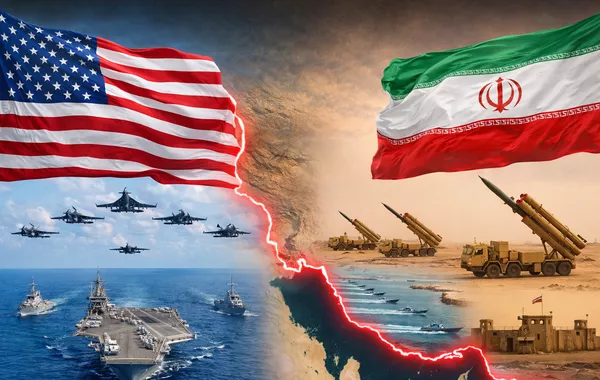
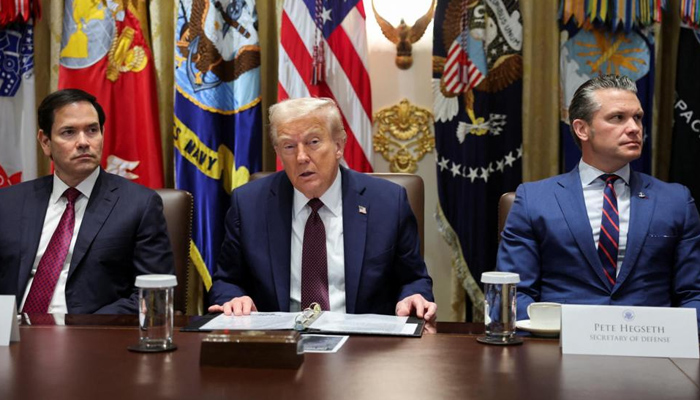
U.S. President Donald Trump has officially convened a National Security Council meeting today to deliberate on the future of American strategy regarding Iran. According to reports from U.S. media outlets, the primary objective of this high-stakes session is to consider the resumption of military operations and increased strategic pressure against Tehran. The meeting marks a significant pivot in administration policy, as officials assess the viability of current diplomatic efforts. The President’s inner circle is expected to provide comprehensive briefings on regional stability and the status of Iranian nuclear capabilities during the closed-door proceedings at the White House.
Senior Administration Officials Expected at Security Briefing
The scheduled meeting is anticipated to include the highest levels of American executive and military leadership. Likely attendees include Vice President J.D. Vance, Special Envoy Steve Witkoff, Secretary of State Marco Rubio, and Secretary of Defense Pete Hegseth. Joining the civilian leadership will be CIA Director John Ratcliffe and the Chairman of the Joint Chiefs of Staff, General Dan Kaine. This gathering of the administration’s core security team underscores the gravity of the decisions regarding potential military escalations. The presence of these officials suggests a multi-agency approach to evaluating both intelligence and tactical readiness for any upcoming operations.
Escalating Military Pressure to Secure Nuclear Concessions
Two government officials have indicated that President Trump is increasingly leaning toward military action as a primary tool to exert pressure on the Iranian government. The objective of this shift is to force concessions regarding Tehran’s nuclear program, which the administration views as an immediate threat. Options currently under review reportedly include the reactivation of “Project Freedom” or the targeting of remaining strategic sites within Iranian territory. These considerations reflect a departure from purely economic sanctions, moving toward a framework where kinetic military options serve as a direct catalyst for diplomatic compliance on nuclear proliferation.
President Trump Critiques Previous Administrations and Current Ceasefire
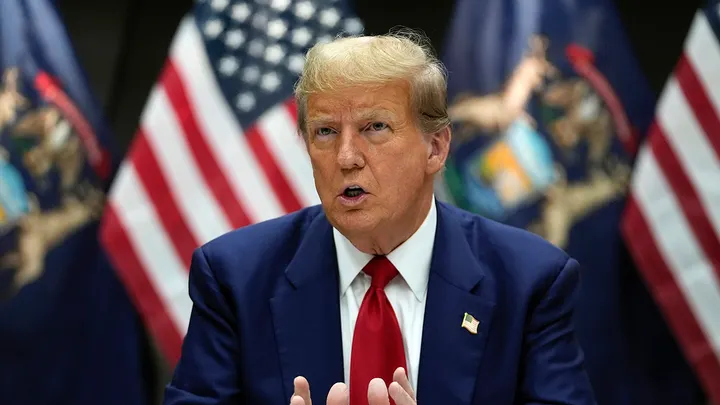
During a press briefing at the White House, President Trump characterized the current ceasefire as being on “life support,” indicating its imminent expiration or failure. He utilized the platform to critique former presidents Barack Obama and Joe Biden, labeling the previous nuclear agreement with Iran as a catastrophic strategic error. Trump asserted that while his predecessors might have accepted recent Iranian proposals, his administration remains committed to a more rigorous standard. He further noted that only the United States and China possess the specialized technical capability required to recover and manage Iranian nuclear materials.
read also ; President Trump Orders U.S. Navy to Neutralize Iranian Minelayers
Strategic Objectives and the Prospect of Global Oil Relief
Despite the heightened military rhetoric, President Trump maintained that a new deal with Iran remains a possibility, provided there is a change in the quality of Iranian leadership. He expressed frustration over the timeline of diplomatic communications, noting that he had waited days for responses that could have been delivered in minutes. The President highlighted that resolving the Iranian crisis would lead to a significant reduction in global oil prices. He reiterated his firm stance that Iran will never be permitted to obtain a nuclear weapon, especially following the regime’s launch of 100 long-range missiles.
Military Successes and Comparison to Venezuela Strategy
The President compared the current naval and economic blockade of Iran to the “brilliant” military planning previously applied to Venezuela. He expressed total confidence in U.S. military achievements, stating that he feels no external pressure or discomfort regarding the escalating situation. Trump emphasized that the United States is performing a global service by confronting Tehran and predicted an eventual “total victory.” He maintained that the administration is operating from a position of absolute strength and is not being forced into these decisions by any foreign or domestic entity.
Engagement with China and Concerns Over Regional Allies
President Trump revealed that Chinese President Xi Jinping has expressed interest in helping resolve the crisis in the Strait of Hormuz. The U.S. President plans to hold extensive discussions with his Chinese counterpart covering Iran, Russia, and the sale of American weaponry to Taiwan. Addressing regional dynamics, Trump expressed disappointment with Kurdish forces. He claimed that the U.S. provided weaponry to the Kurds intended for operations within Iran, but those weapons were instead retained by the groups for their own independent use, complicating the regional security framework.