Ambassador Baluch Launches Strategic Policy Prism at Islamabad Institute
ISSI Hosts Launch of The Third Dimension Policy Prism
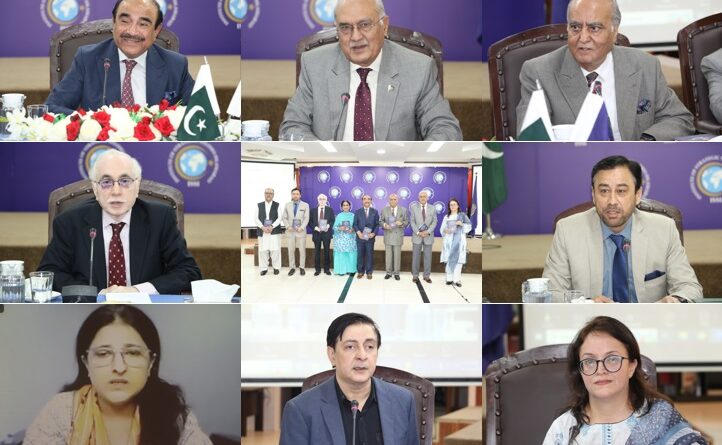
The Institute of Strategic Studies Islamabad (ISSI) served as the venue for the high-profile launch of “The Third Dimension Policy Prism,” a new work authored by Ambassador G. R. Baluch. The event, held on May 12, 2026, brought together a distinguished assembly of diplomats, academics, and strategic scholars. Dr. Neelum Nigar, Director of the Centre for Strategic Perspectives at ISSI, opened the proceedings by expressing appreciation for Ambassador Baluch’s decision to use the institute as a platform for his scholarly contribution. The launch highlighted the institute’s ongoing role as a hub for critical discourse on international relations and national policy frameworks during a period of global transformation.
Scholarly Reflection on Contemporary Global Political Transformations
Ambassador Khalid Mahmood provided the welcome remarks, characterizing the book as a significant and timely contribution to the field of international politics. He noted that the current global environment is defined by intense geopolitical competition, economic realignments, and rapid technological disruptions. Mahmood praised the author for successfully merging practical diplomatic experience with academic rigor. The book presents a multidimensional view of foreign policy, arguing that modern diplomacy is influenced not just by traditional politics, but also by climate change, information technology, and the increasingly influential role played by non-state actors in the global arena.
The Battle of Narratives in Modern International Diplomacy
During the introduction of his work, Ambassador G. R. Baluch described the book as an ongoing conversation rather than a traditional static text. He emphasized that the modern world is currently engaged in a “battle of narratives,” where global influence is dictated by the ability to shape discourse and ideas. Baluch noted that ideas traveling from the printed page to the human mind eventually manifest as formal national policies. He thanked the ISSI for encouraging a deep and meaningful dialogue on how these narratives impact Pakistan’s standing in international affairs and the broader global debate on security and cooperation.
Integrating Ethics and Humanity into Strategic Frameworks
General Khalid Naeem Lodhi, former Defense Secretary, highlighted the central thesis of the book: the incorporation of ethics and humanity into the “third dimension” of international relations. While traditional strategic thought focuses almost exclusively on national interests, Lodhi observed that Baluch’s framework adds a moral layer to foreign policy. The book’s five chapters provide a comprehensive look at the Muslim Ummah, the crisis in Gaza, and regional dynamics in the Middle East. Lodhi noted that the work frames current global challenges through “three Cs”—conflict, cooperation, and consensus—while specifically addressing the transformative power of technology on strategic competition.
read also; Prime Minister Shehbaz Sharif Strengthens Global Ties During Tour
Analysis of South Asian Geopolitics and National Interests
Ambassador Masood Khalid reviewed the book as an accessible yet profound collection of essays that bridge longstanding geopolitical challenges with modern concerns. He specifically pointed to the author’s analysis of South Asia, including India’s strategic posture during Operation Sindoor and the resulting implications for regional stability. Khalid noted that the work effectively connects the humanitarian dimensions of the Gaza conflict with Pakistan’s specific national interests. By linking global developments to local strategic realities, the book offers a comprehensive guide for understanding the complex pressures currently facing Pakistan’s foreign policy establishment and its diplomatic corps.
Values and Ideology as Enduring Sources of Power
Dr. Munawar Hussain of QAU observed that the author moves beyond the standard lenses of power politics and economic rivalry to examine the subjective values that shape international society. Hussain argued that ideology remains a potent source of power, as human societies are driven by purpose rather than just material causes. The book advocates for a move toward multilateralism over unilateralism, a perspective that Dr. Hussain noted is increasingly validated by recent global events. This shift suggests that cooperative international engagement is becoming the only viable path for navigating the ethical and political complexities of the 21st century.
Perception and Meaning-Making in the Battle for Geopolitics
Dr. Shazia Khalid Cheema emphasized that the book explores the psychological and cultural dimensions that influence how societies perceive themselves and their rivals. She noted that political identities are constructed through media discourse, historical memories, and ideological frameworks, turning geopolitics into a battle over meaning-making. Cheema praised the intellectual breadth of the work, which transitions seamlessly from regional issues in the Middle East to internal institutional challenges within Pakistan. Finally, Mr. Farukh Pitafi noted the book’s humanistic reflections on artificial intelligence and education, concluding that the work is a stimulating read for both career diplomats and academic theorists.