Pakistan Not Part of Gaza Stabilization Force
Pakistan is not among the five countries that have deployed or pledged to deploy troops to the newly formed International Stabilization Force, a multinational initiative designed to operate in Gaza under a peace framework proposed by U.S. President Donald Trump.
The force is tasked with securing reconstruction zones in Gaza and supporting postwar administrative arrangements. It forms a central component of President Trump’s broader peace initiative aimed at stabilizing the territory following two years of devastating conflict.
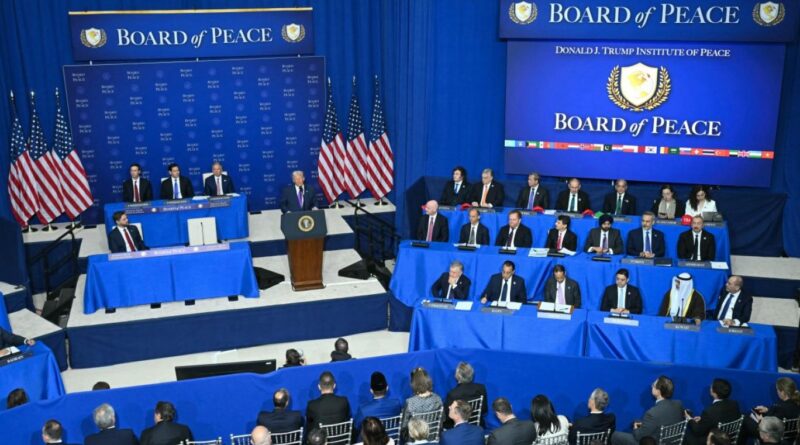
Speaking at the launch of his “Board of Peace” on Thursday, President Trump pledged $10 billion in U.S. support for the initiative. Several Muslim-majority nations also offered financial contributions and troop commitments for Gaza. However, questions remain regarding the final mandate and operational structure of the board.
President Trump gathered allies from around the world for the launch event. Among them were several authoritarian-leaning governments as well as some Western democracies that traditionally align with the United States. Participants praised the peace initiative even as the administration signaled military pressure near Iran and warned of potential conflict.
The Board of Peace convened as the Trump administration, working alongside Qatar and Egypt, engaged in negotiations in October to secure a ceasefire in Gaza and halt the prolonged war. The second phase of the proposed plan calls for the disarmament of Hamas as part of broader stabilization efforts.
For the first time among Arab nations, Morocco announced its readiness to contribute officers, in addition to police personnel, to the emerging International Stabilization Force. The force’s U.S. commander, Major General Jasper Jeffers, stated that Albania, Indonesia, Kazakhstan, and Kosovo are also contributing troops. He further announced that an Indonesian officer will serve as his deputy.
Indonesia, the world’s largest Muslim-majority country, had previously indicated it was prepared to deploy up to 8,000 troops—half of the 20,000 personnel sought for the mission. President Trump publicly praised Indonesian President Prabowo Subianto, who attended the meeting. Subianto, a former military officer previously accused of human rights abuses in East Timor, was described by Trump as “tough.”
The United States has nominated experienced Bulgarian diplomat Nickolay Mladenov as its senior representative for Gaza. Mladenov announced the start of recruitment for a post-Hamas police force in Gaza, reporting that 2,000 applications were submitted within the first hours of the process.
Despite ceasefire discussions, Gaza’s Health Ministry, which operates under Hamas authorities, reported that Israeli forces have killed at least 601 people since the ceasefire took effect.
Representing Israel at the Board of Peace meeting, Foreign Minister Gideon Sa’ar called for Hamas to be disarmed and for what he described as a fundamental transformation within Gaza.
President Trump, who has sharply reduced foreign aid in recent months, stated that the United States would contribute $10 billion to the board. Qatar, Saudi Arabia, and the United Arab Emirates each pledged at least $1 billion. According to White House Press Secretary Karoline Leavitt, total pledges have exceeded $6.5 billion.
President Trump did not clarify how the pledged funds would be allocated or whether Congress has approved the announced U.S. contribution. He is expected to retain veto authority over the Board of Peace and could continue leading it even after leaving office. Countries seeking permanent membership beyond an initial two-year term would be required to pay $1 billion.