
Researchers Warn Climate Change Accelerating Rapidly Worldwide
Global temperatures are rising faster than ever, with humanity driving the planet toward unprecedented heating, according to new research.
Global Warming Rate Almost Doubles Over Past Decade
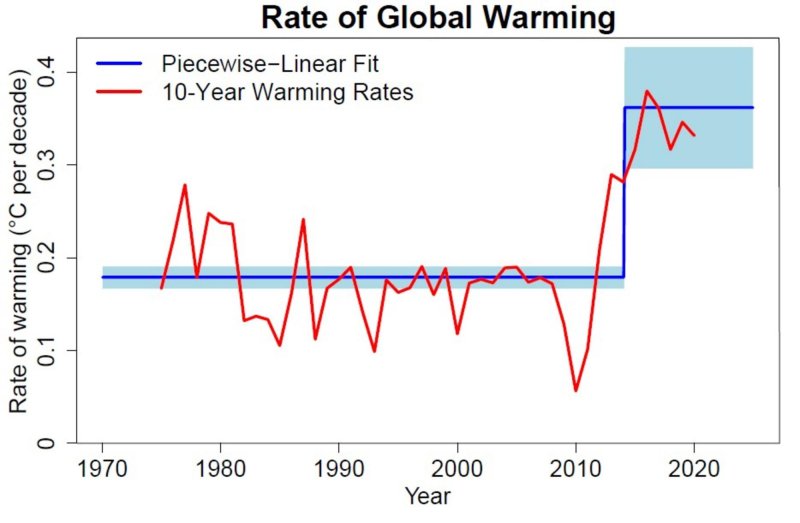
The study, which removes the effects of natural climate fluctuations such as El Niño, solar cycles, and volcanic eruptions, found that the global warming rate has almost doubled over the past decade. Researchers reported that global temperatures increased by about 0.35°C per decade between 2013 and 2023, compared with a steadier rate of less than 0.2°C per decade from 1970 to 2015. This marks the fastest rate of warming observed since systematic temperature records began in 1880.
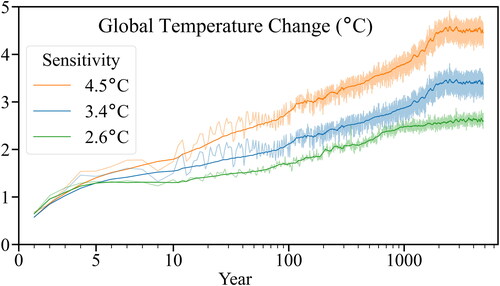
“If the warming rate of the past 10 years continues, it would lead to a long-term exceedance of the 1.5°C limit of the Paris Agreement before 2030,” said Stefan Rahmstorf, co-author of the study.
Study Finds Earth Heating Faster Than Ever Recorded
The research team applied a noise-reduction method to five major global temperature datasets to filter out the effects of nonhuman factors. In each dataset, an acceleration in warming emerged around 2013 or 2014, signaling a clear trend beyond short-term anomalies.
Zeke Hausfather, who was not involved in the study, noted, “There is now pretty widespread – if not quite universal – agreement that there has been a detectable acceleration in warming in recent years. However, it remains unclear how much of the additional warming over the past decade is a forced response versus unforced variability.”
Planet’s Temperature Rising Sharply, New Study Shows
The study emphasizes that carbon pollution has already warmed the planet by roughly 1.4°C above preindustrial levels. This warming is compounded by a reduction in cooling sulphur pollutants, which had previously provided temporary relief. A previous study co-authored by Hausfather reported a slightly slower acceleration of 0.27°C per decade, highlighting the increasing urgency of climate action.
Read Also : US Intelligence Confirms Iran Government Resilient To Pressure
“Either way, this represents a significant increase in the rate of warming,” Hausfather said. “This should be worrying as the world hurtles toward crossing 1.5°C later this decade.”

The acceleration of global warming is consistent with climate model predictions. Analysis of the EU’s Copernicus dataset suggests that if the current rate continues, the planet could exceed the 1.5°C threshold for long-term warming this year. Other datasets indicate the breach may occur between 2028 and 2029.
Claudie Beaulieu, who was not involved in the study, warned that these findings narrow the window for limiting warming even to 2°C above preindustrial levels if the current acceleration continues.

She added an important caveat: past periods of apparent rapid warming, such as the strong El Niño of 1998, may be temporary anomalies. Nevertheless, the trend signals an urgent need for global mitigation efforts to curb emissions and slow the pace of climate breakdown.
The study underscores the accelerating nature of climate change, highlighting that immediate action is critical to prevent surpassing internationally agreed temperature limits within the next decade.